_(1).svg)
(Updated: October 2026)
Lotus flowers have been a symbol of peace, harmony, and spiritual awakening for thousands of years. Blue Lotus and White Lotus are proof of this. However, although they look similar, they do differ, especially in their effects.
Short answer: Blue lotus (Nymphaea caerulea) is the gently uplifting one. It brings mild euphoria and a dreamy, meditative mood. The white lotus flower (Nymphaea lotus and Nymphaea ampla) is the calmer one, used mainly for deep relaxation, rest and better sleep. Choose blue lotus for meditation and evening rituals, and white lotus when you want to unwind and switch off.
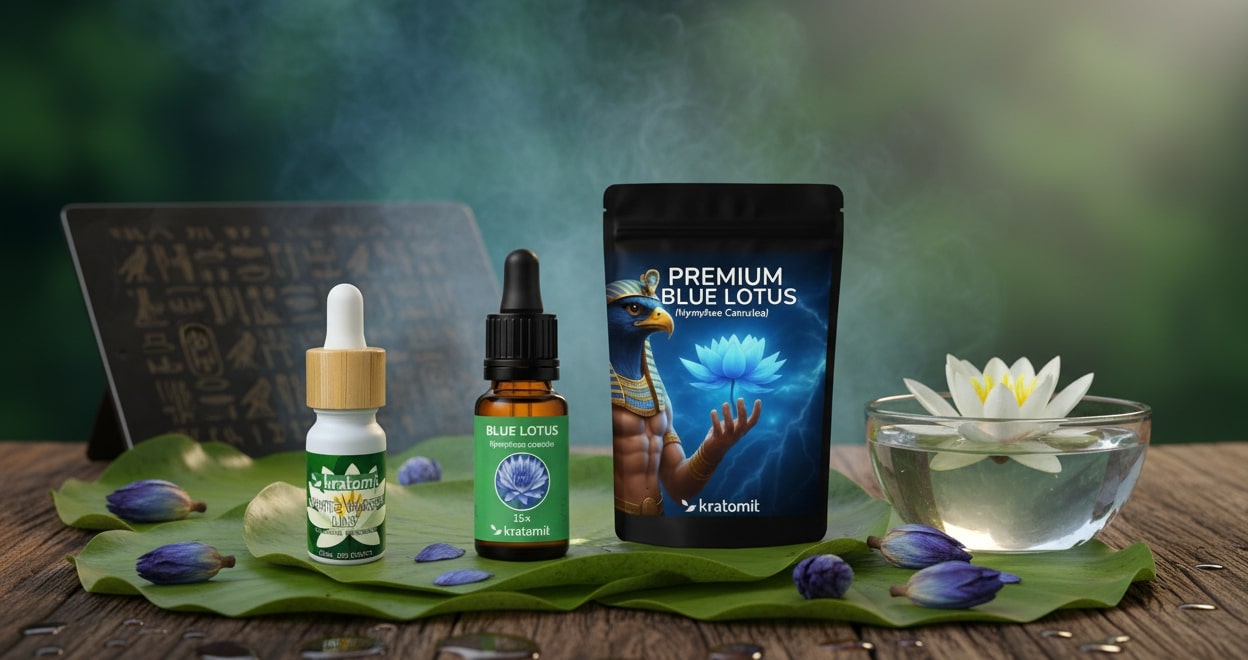
What is Blue Lotus?
Blue Lotus (Nymphaea caerulea), also known as the blue water lily, originates from the region of ancient Egypt and was historically associated with spiritual rituals and meditation. Egyptian priests considered it a plant with "divine energy" that helps open the mind and deepen perception.
Main effects of Blue Lotus
-
Mild euphoria and mood elevation – naturally affects the nervous system, inducing a feeling of lightness and contentment.
-
Support for meditation and introspection – helps achieve deeper focus and inner calm. Blue Lotus is often associated with supporting lucid dreaming.
-
Aphrodisiac effects – traditionally used to increase sensitivity and connection with the body.
-
Relief of tension and stress – suitable for evening relaxation and rest.
Blue Lotus has mild psychoactive effects due to aporphine and nuciferine compounds that act on dopamine receptors. The result is a natural feeling of relaxation, euphoria, and mental harmony without heaviness or sedation.
Most popular form of Blue Lotus
-
Dried Blue Lotus Flowers: These are dried flowers of premium quality, suitable for preparing tea, smoke therapy, or meditation.
-
Blue Lotus Tincture: If you are looking for a more intense effect, the tincture from Blue Lotus is a great choice. It is a strong liquid extract that is not only easy to use but also acts quickly.
What is the white lotus flower?
White Lotus (Nymphaea lotus), also known as the white water lily, is related to Blue Lotus, but its effects are completely different. While Blue Lotus has a slightly stimulating effect, White Lotus is its calmer and more grounding variant.
In traditional East Asian medicine, it was used for harmonizing the body, supporting relaxation, and restoring energy after stress or physical exertion.
The name white lotus is used for white flowering water lilies, mainly Nymphaea lotus and Nymphaea ampla. Both grow in warm still waters and have large white petals around a golden yellow centre. Like the blue lotus, the white lotus flower was admired in ancient cultures, but it has always been linked more with rest, night and quiet regeneration than with rituals of joy and celebration.
Today the white lotus flower is used in two main forms, as dried white lotus flowers for tea and as a concentrated white lotus extract in the form of a tincture.
White lotus flower effects
-
Calming the body and mind – helps regenerate after a demanding day.
-
Support for quality sleep – aids natural relaxation before falling asleep.
-
Antioxidant and regenerative effects – protects cells and supports the body's regeneration.
-
Improvement of balance and mood – acts as a natural anti-stress remedy.
White Lotus does not induce euphoria, but rather a deep sense of calm and relaxation, making it an ideal choice for those who want to regenerate without any stimulation.
White lotus extract
White lotus extract is a concentrated form of the flower, usually sold as a tincture. Because the active compounds are already extracted, it is easy to use: a few drops added to water or tea, ideally in the evening, are typically enough. Always follow the instructions on the package and start with a smaller amount.
Compared with dried flowers, the extract works faster and its strength is more consistent, while a tea from dried white lotus flowers is the more traditional and gentler option. You can read more about it in our article white lotus extract for deep relaxation and regeneration, or try our white lotus tincture directly.
White lotus vs blue lotus: effects and differences
Let's summarize the main differences between Blue and White Lotus in the table below.
|
Property |
Blue Lotus |
White Lotus |
|
Botanical Name |
Nymphaea caerulea |
Nymphaea lotus, Nymphaea ampla |
|
Popular Forms |
Dried flowers, tincture |
Dried flowers, extract (tincture) |
|
Main Effect |
Mild euphoria, mood elevation |
Calm, relaxation, regeneration |
|
Effect on Nervous System |
Mild dopamine stimulation |
Calming and tension relief |
|
Effect on Body |
Muscle relaxation, sleep support |
Regeneration and deep relaxation |
|
Ideal For |
Meditation, evening rituals, spiritual practice |
Regeneration, rest, sleep |
|
Aphrodisiac Effects |
Yes, mild |
Mostly neutral |
Which one is right for you?
The choice between Blue and White Lotus depends mainly on what you expect from the extract.
Choose Blue Lotus if:
- you are looking for light stimulation and mild euphoria,
- you want to deepen meditation or spiritual ritual,
- you are interested in aphrodisiac effects,
- you want to relax your body while stimulating the mind.
Blue Lotus will give you a feeling of lightness, joy, and openness, ideal for moments of introspection or evening rituals.
If you decide on blue lotus, our guide how to use blue lotus explains step by step how to make blue lotus tea, how to use the tincture and how much to start with. You can choose between dried blue lotus flowers and the concentrated blue lotus tincture 15x.
Choose White Lotus if:
- you need to regenerate after a demanding day,
- you suffer from stress, tension, or insomnia,
- you seek a natural way to calm body and mind,
- you prefer a non-psychoactive safe supplement.
White Lotus will provide you with deep calm, harmony, and regeneration, ideal for daily rituals or evening relaxation.
For white lotus, the easiest start is the white lotus tincture, while lovers of herbal tea can reach for dried white water lily flowers.
Frequently asked questions
What is the white lotus flower?
The white lotus flower is a white water lily, mainly Nymphaea lotus or Nymphaea ampla. It is a close relative of the blue lotus and is valued for its calming and relaxing qualities.
What are the effects of white lotus?
White lotus is known mainly for calming the body and mind, supporting relaxation in the evening and helping you wind down before sleep. Unlike blue lotus, it does not bring a noticeable euphoric lift.
Is white lotus stronger than blue lotus?
Not stronger, but different. White lotus is usually described as more sedating and its relaxing effect can feel heavier, while blue lotus is lighter and more uplifting.
What is the difference between white lotus extract and dried flowers?
The extract is a concentrated tincture that is quick to use and easy to dose. Dried flowers are prepared as a tea, which is the more traditional and gentler way.
Conclusion
Whether you choose Blue or White Lotus, both plants can offer more than just relaxation. They represent a return to yourself, slowing down, and connecting with your own energy. Discover and find out which one is right for your personal journey to inner balance.
Disclaimer: This article is for informational purposes only. The content is not intended for internal consumption and is not approved as a food or dietary supplement, and is for collectible purposes only.
Author: Dominik