_(1).svg)
Imagine a plant that has served people in Southern Africa for centuries as a natural remedy for stress, anxiety, and fatigue. Wild Dagga, also known as Leonotis leonurus or "Lion’s Tail," offers gentle relaxation, mild euphoria, and vitality support, all completely naturally. Do you want to know how to use this fascinating herb and what it can do for your body and mind? Keep reading.
What is Wild Dagga?
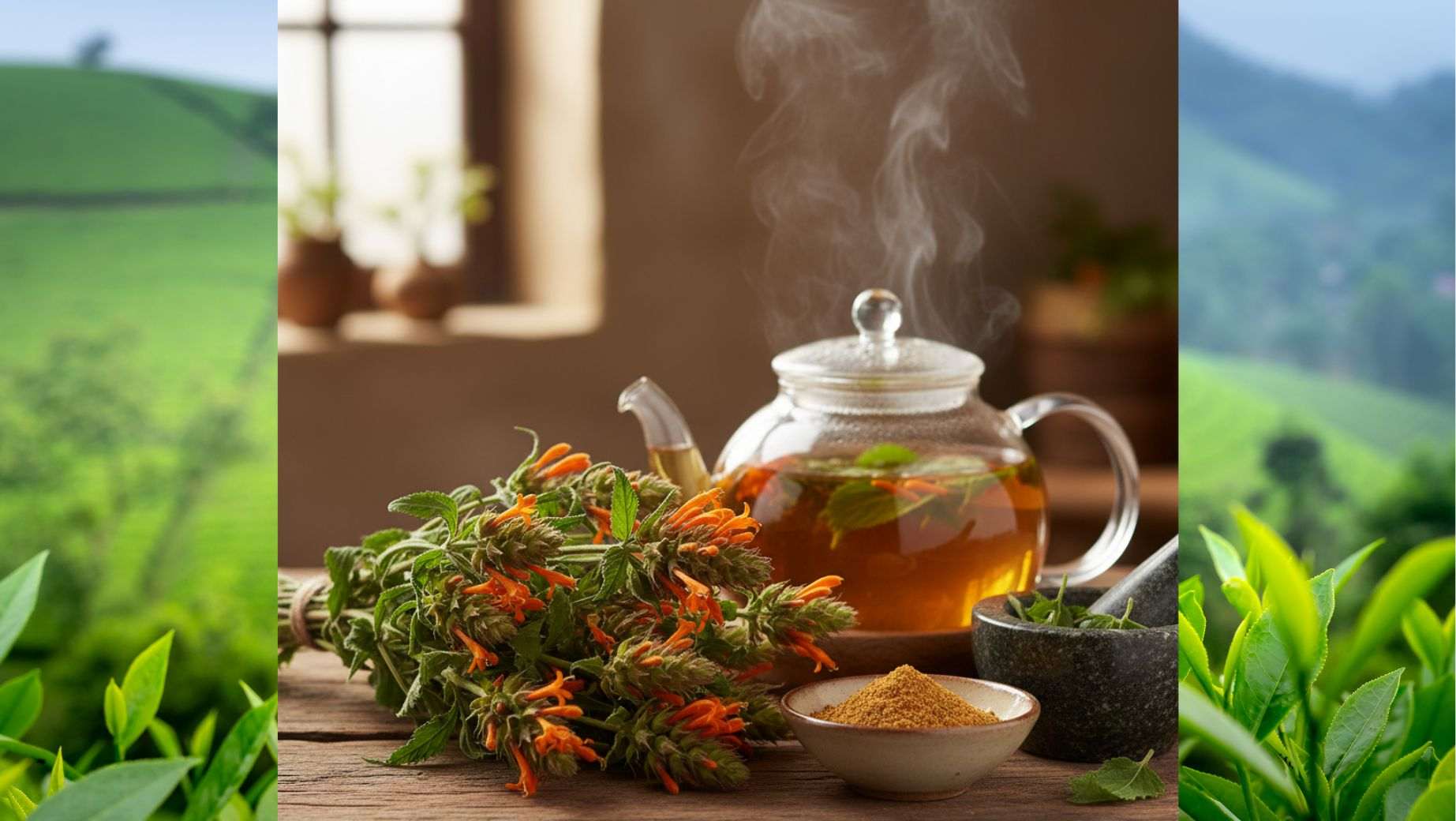
Wild Dagga is a perennial plant that grows up to 2–3 meters tall, originally from the South African savannas. Its flowers are bright orange and aromatic, while the leaves have a characteristic slightly bitter taste. Traditionally, the flowers are harvested, dried, and used to make teas or for smoking.
Wild Dagga, often nicknamed "wild hemp," earned this nickname because of the appearance of its striking flowers. However, it is not hemp in the strict sense, and its effects are gently calming rather than psychoactive. On the other hand, the name "Lion’s Tail" refers to the shape of the flowers, which resemble lion tails, and symbolizes strength and vitality that the plant is traditionally believed to provide.
What does the wild dagga plant look like?
Wild dagga (Leonotis leonurus) belongs to the mint family (Lamiaceae). It is a fast growing shrub with square stems and narrow, aromatic leaves that smell herby when crushed. Its most striking feature are the bright orange, tube shaped flowers that grow in round clusters one above another along the stem. Besides the classic orange form, there are also rarer white and apricot coloured varieties.
The plant is common throughout South Africa, where it grows in rocky grasslands and along forest edges. Thanks to its showy flowers, which attract sunbirds and bees, it is also popular as an ornamental garden plant. The Afrikaans name wildedagga means "wild cannabis" and comes from the old local custom of smoking its dried leaves and flowers, even though the plant is not related to hemp.
In the traditional medicine of South African tribes, Wild Dagga was used as a remedy for relaxation, sleep support, calming the nervous system, and sometimes for mild pain relief.
Wild Dagga has a long history of use in traditional African medicine. Locals primarily used it for:
- Calming the nervous system – prepared as a tea or smoked to reduce stress and tension.
- Supporting mental well-being – it was traditionally believed that Wild Dagga helps improve mood and induce a sense of calm.
- Supporting physical health – sometimes used for mild pain relief or to stimulate the circulatory system.
- Social and ritual purposes – the plant was part of ceremonies where it symbolized strength, courage, and energy.
Effects of Wild Dagga
Modern interest in wild dagga focuses on its effects on mind and body. Most of what we know comes from traditional use and user reports, while scientific research is still limited and mostly based on laboratory and animal studies. The effects are usually described as mild:
1. Support for relaxation and mental well-being
Wild Dagga is known for its calming effects. It contains compounds that can gently influence the nervous system, reduce tension, and promote relaxation. For this reason, it is often used for stress or anxiety.
2. Mildly uplifting mood
Wild Dagga can provide a mild euphoric effect, or a feeling of lightness and relaxation without the intense psychoactive effects typical of other plants. This makes it popular among people seeking relaxation and a calm mood.
3. Traditional use for breathing and circulation
Traditionally, wild dagga was also used for coughs and to support breathing and circulation. Ethnobotanical records describe this use, but there is not enough scientific evidence to confirm such effects, so it should not be seen as a remedy for any health problem.
4. Antioxidant compounds
The flowers of wild dagga contain plant compounds with antioxidant properties, which have been studied mainly in the laboratory. Whether this brings any real benefit when the plant is used has not yet been confirmed.
How is Wild Dagga used?
Wild Dagga is available on the market in various forms:
- Dried flowers: traditionally used for tea.
- Tinctures and extracts – concentrated form for easy dosing.
- Capsules – a convenient alternative for those who do not want to prepare tea.
Dosage depends on the product form and individual sensitivity. Start with a smaller dose and gradually increase to monitor the body's reaction.
Wild dagga tea
Tea is the most common traditional way wild dagga was used. Locals steeped the dried leaves and flowers in hot water and drank the infusion mainly in the evening, to relax and calm down. The tea has a slightly bitter, herbal taste, so it was sometimes sweetened with honey.
Wild dagga tea effects
The effects of wild dagga tea are usually described as gentle relaxation and a calmer mind, sometimes with a light lift in mood. Compared with other forms, the tea is considered the mildest way the plant was used. Because people react differently, it was traditionally taken in small amounts.
Smoking wild dagga in tradition
Smoking is the use the plant owes its name to. Indigenous peoples of South Africa, such as the Khoikhoi, smoked the dried leaves and flowers during social and ceremonial occasions, and early travellers described its effect as relaxing and much milder than cannabis.
Important: this section describes historical tradition only. Smoking any plant material irritates the airways and lungs. Our Wild Dagga tincture is a liquid extract and is not intended for smoking.
Possible side effects and safety
Wild dagga is usually well tolerated in small amounts. Sensitive individuals may experience drowsiness, slight dizziness or a drop in blood pressure. Animal studies have shown that very high doses of the extract can be harmful, so moderation is important.
- Pregnant and breastfeeding women should avoid it.
- Do not combine it with alcohol, sedatives or other calming substances.
- People with low blood pressure or those taking medication should consult a doctor first.
- Do not drive or operate machinery if you feel drowsy.
Why is Wild Dagga popular today?
Thanks to its combination of relaxing and mildly euphoric effects, Wild Dagga is popular among people seeking natural ways to manage stress, improve mood, or enjoy a moment of calm. The plant combines traditional African knowledge with modern healthy lifestyle trends, making it an attractive natural alternative.
FAQ – Frequently Asked Questions
1. Is Wild Dagga suitable for everyone?
Mostly yes, but people with low blood pressure, pregnant, and breastfeeding women should consult a doctor.
2. What form of Wild Dagga is best for beginners?
Tea or capsules are ideal for beginners – the dosage is easy to control, and the effects are milder.
3. How often can Wild Dagga be used?
It is recommended 1–2 times daily, always following the manufacturer’s advice and individual sensitivity.
4. Can I combine Wild Dagga with other herbs?
Yes, it is often combined with adaptogens and herbs that support relaxation and vitality.
Conclusion
Wild Dagga (Leonotis leonurus) is a fascinating plant that offers a range of effects, from relaxation, through mild euphoria, to its traditional use for breathing and circulation. Its traditional use in Southern Africa confirms that it is a valuable herb for both mental and physical well-being. For those seeking a natural way to improve mood and calmness, Wild Dagga can be an excellent choice.
Author: Adél