_(1).svg)
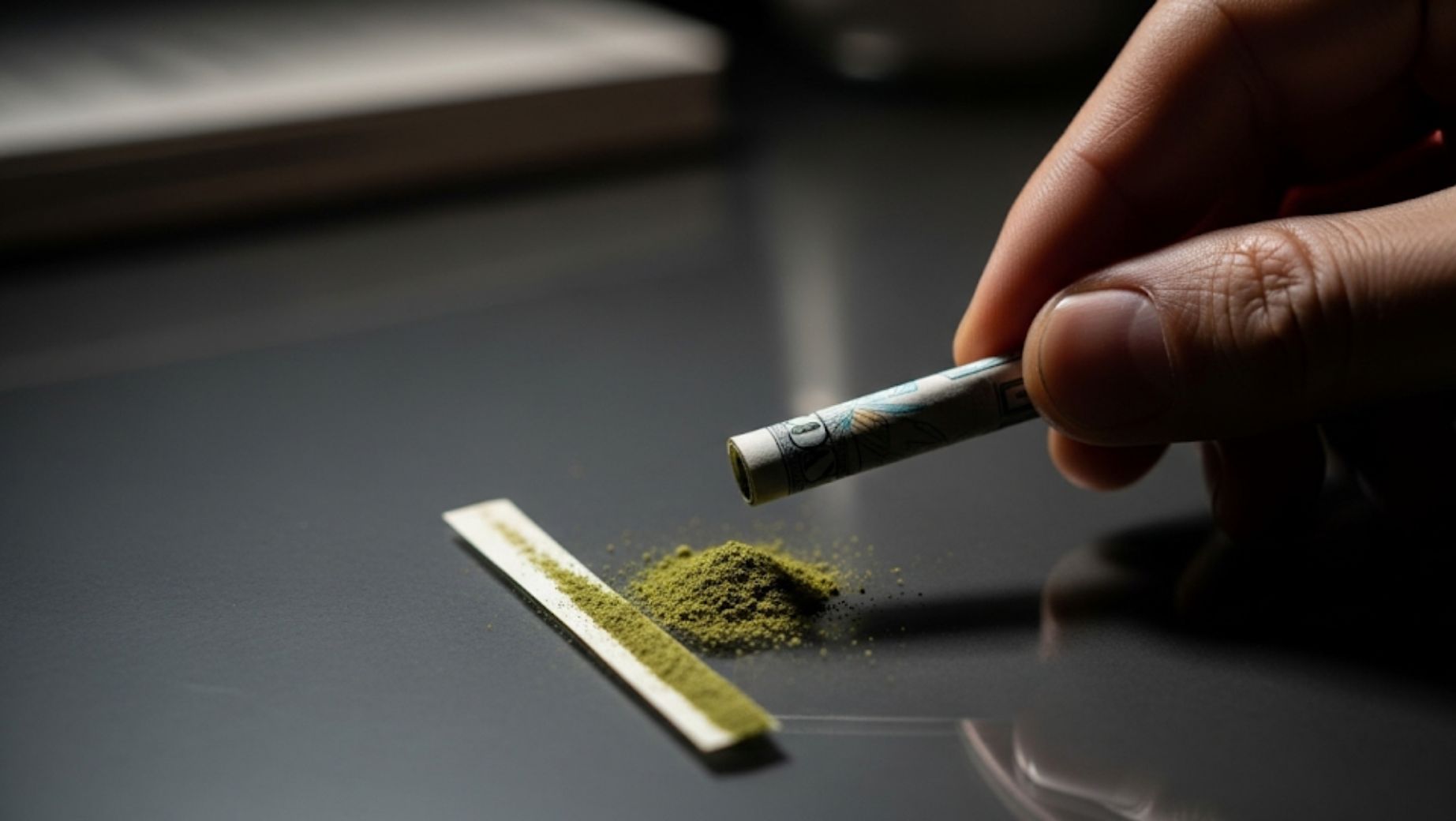
Kratom (Mitragyna speciosa) is a tropical tree native to Southeast Asia, whose leaves contain alkaloids such as mitragynine and 7-hydroxymitragynine. Traditionally, it was used by chewing the leaves or preparing beverages. Recently, questions have arisen regarding various methods of applying kratom powder, including the possibility of snorting it. So, how is it, and is it safe?
History of kratom
In traditional history, kratom was mainly used in the form of chewing leaves or preparing beverages. These methods were known in communities in Southeast Asia and were recorded in historical texts and ethnobotanical studies. Historical records show that the plant was valued primarily for its chemical composition, with different cultivars having distinct properties depending on the region in which they grew.
Kratom and snorting
Technically, it is possible to inhale kratom powder, but scientific evidence shows that it is a risky method of contact with the plant. Inhalation of fine powder can have serious health consequences, both short-term and long-term.
What happens when snorting?
Inhaling the powder accelerates the contact of alkaloids with the nasal mucosa, which means a more intense and faster chemical effect, but at the same time a higher risk of tissue damage.
Chemical composition of kratom and its effect on mucosa
Kratom contains over 40 alkaloids, with mitragynine and 7-hydroxymitragynine being the most significant. Studies generally show that inhalation of fine plant powders can cause mechanical and chemical irritation of mucosa, increasing the risk of inflammation and infections.
Possible negative effects of snorting kratom
Short-term effects:
- irritation of the nasal mucosa, inflammation, and nosebleeds,
- respiratory problems, throat and sinus irritation,
- sinus infections and nasal congestion.
Long-term consequences:
- damage to mucosa and perforation of the nasal septum,
- chronic respiratory problems, including bronchitis and lung inflammation,
- blood clots and risk of pulmonary embolism,
- loss of smell and necrosis of nasal tissue.
Mechanical and chemical irritation from fine plant fiber particles is the main factor in these complications.
Why snorting kratom is studied
Historically, snorting was not a traditional practice. Discussions about this method arise from modern interest in alkaloids and hypothetical ways of interacting with the body. From a chemical perspective, it is fascinating that kratom contains over 40 different alkaloids with distinct biological activity. Despite this scientific interest, snorting is not a safe method, because the nasal mucosa is not adapted for direct contact with fine plant powder.
What do studies say?
Scientific studies and expert reports identify several serious health risks associated with snorting kratom powder:
-
Damage to the nasal mucosa and respiratory tract: Snorting kratom can lead to irritation and damage to the nasal mucosa, increasing the risk of infections and long-term respiratory problems.
-
Sinus infections (sinusitis): Damaged nasal mucosa is more susceptible to infections, which can lead to sinus inflammation.
-
Increased risk of pulmonary embolism: Inhaling fine powder can lead to the formation of blood clots, which can cause pulmonary embolism.
-
Lung tissue damage: Repeated snorting can cause chronic inflammation and damage to lung tissue.
-
Increased risk of infections: Damaged mucosa facilitates bacterial and fungal entry, increasing the risk of various infections.
Conclusion
Snorting kratom is neither historically documented nor scientifically safe as a method of contact with the plant. Scientific studies confirm that inhalation of kratom powder can cause irritation of the nasal mucosa, chronic respiratory problems, inflammation and infections, and even lung tissue damage. The history of kratom emphasizes its cultural significance in Southeast Asia, with traditional processing methods limited to chewing leaves and preparing beverages.
Kratom is intended solely for collection or educational purposes and is not approved for human consumption. The information in this article is for informational and educational purposes only, is based on publicly available sources, and is not intended as an encouragement to use or handle kratom in a manner that would violate the laws of a given country. The author of the article is not responsible for any misuse of the information provided.