_(1).svg)
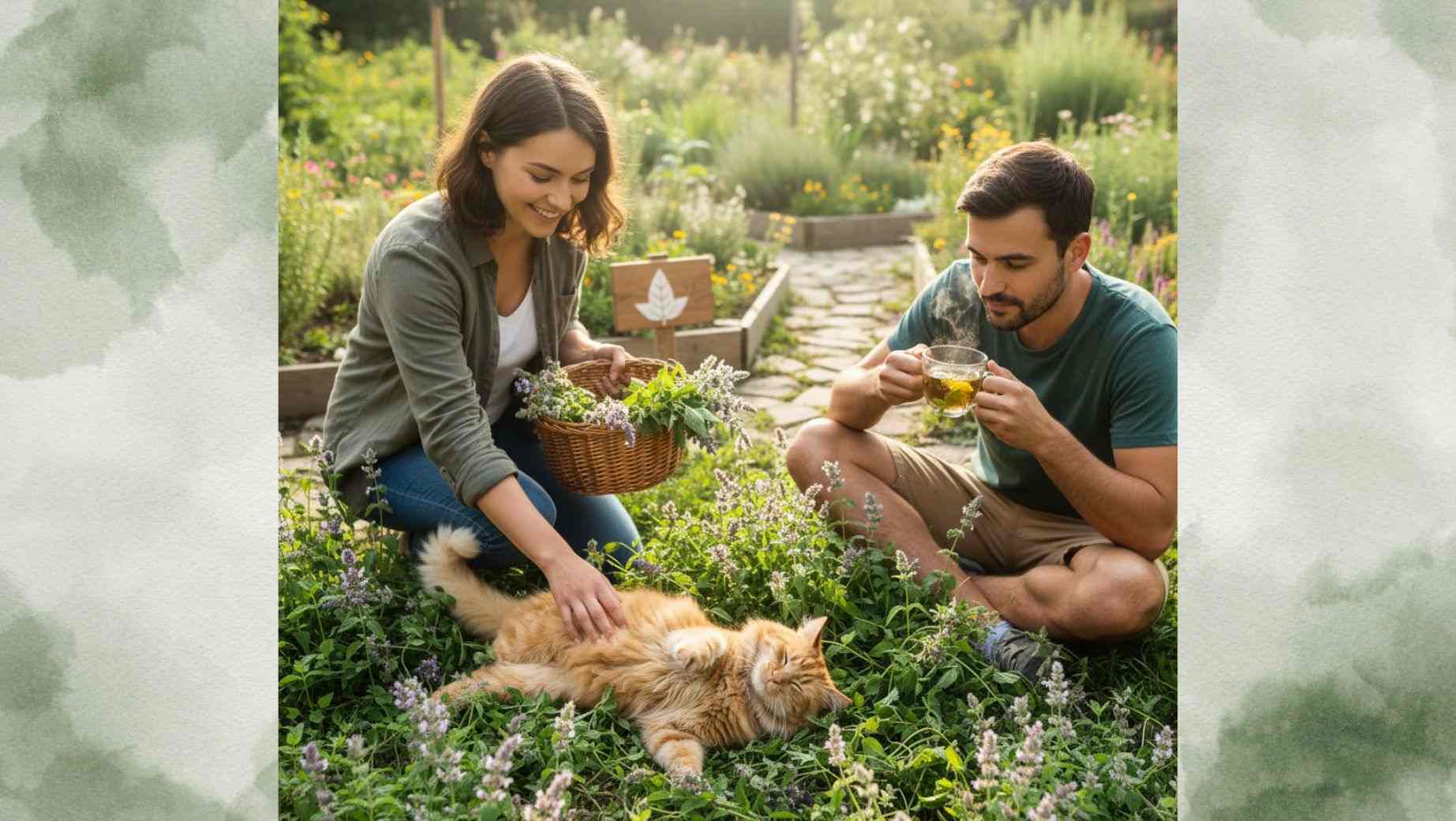
When you say catmint, many people imagine scenes of cats rolling in flower beds, rubbing against leaves, and acting as if they were in seventh heaven. Catmint, often referred to as catnip, got its name precisely thanks to its extraordinary relationship with cats, but its effects go far beyond our furry companions. People also use it, and that’s why we’ll look at what it causes not only in animals but also how it benefits us.
Why do cats love catmint so much?
The main active substance of catnip is nepetalactone, which is a compound found in the leaves and stems of the plant. This substance acts on cats’ olfactory receptors and triggers a specific reaction. However, not all cats are sensitive, and it is estimated that about 60–70% of cats react to catmint very intensely, while the rest remain completely indifferent.
A typical reaction includes rolling on the ground, rubbing the plant with the mouth, licking the leaves, “pawing” at it, and sometimes even loud purring or meowing. The whole “effect” usually lasts 5–15 minutes, after which the cat loses interest. It is able to react again only after a certain time, when its receptors “rest.”
What’s interesting? The reaction to catmint is hereditary. If the cat was sensitive, there’s a high chance that its offspring will also love the plant.
Catmint in history and folk medicine
Not only cats, but also people liked catmint as far back as in ancient times. In Europe, catnip was cultivated as a medicinal and seasoning plant for centuries.
- Middle Ages: The herb was part of monastic gardens and was used for colds, fevers, or calming nerves.
- Folk traditions: In England, catnip was added to beer even before hops became widespread. In the Czech lands, it was known as a tea against cough.
- Home pharmacy: Decoctions from the root and leaves were boiled to support digestion or to relieve menstrual pain.
Its effects are therefore not limited only to “fun for cats.”
Effects of catmint on human health
But it’s not only cats who benefit from catmint. Let’s take a look at its effects on human health.
1. Calming properties
In addition to nepetalactone, catnip leaves also contain other aromatic essential oils that have mild sedative effects. Catnip tea is recommended for nervousness, anxiety, and sleep problems. It works gently, similar to lemon balm or lavender. At a time when people are looking for gentle and natural ways to health, it represents an interesting alternative to synthetic remedies.
2. Digestive support
The herb helps relax smooth muscles in the digestive tract, which is why it has traditionally been used against bloating, stomach cramps, and the feeling of heaviness after eating.
3. Relief from colds
A warm infusion of catnip promotes sweating, thus helping to reduce fever. Its mild antiseptic effects can also provide relief from colds or coughs. Thanks to this, catmint is often included in blends of dietary supplements to support immunity.
4. Menstrual problems
In folk medicine, catmint was given to women during painful menstruation because it helps relax muscle tension and relieve cramps.
Catmint today
Today, catnip is grown not only as an ornamental plant with beautiful purple or blue flowers, but also as a useful helper in the home and garden.
-
For cats: Dried leaves are added to toys, scratching posts, or pillows. Cats then get more exercise, which benefits their condition and mental well-being.
-
For people: Catmint appears in blends of herbal teas intended for calming and supporting sleep.
-
In the garden: The plant is hardy, undemanding, and its essential oils repel some pests, especially aphids and mosquitoes.
How to use catmint safely?
For cats, catmint is completely safe. Even if they lick or chew it, it won’t harm them. However, it’s good not to overdo frequent exposure, so that the reaction doesn’t become “boring.” Ideally, catnip should be offered only occasionally as a game enrichment.
For people, it is recommended to prepare it mainly in the form of tea. Although it has no known serious side effects, it is not recommended to use it long-term in high doses. Pregnant and breastfeeding women should rather avoid its use, as it could trigger unwanted contractions.
Conclusion
Catmint is a fascinating herb that connects the world of humans and cats. For our four-legged pets, it represents a source of euphoria, play, and joy. For us, it’s a gentle remedy for calming, supporting digestion, or alleviating colds. It’s no wonder that catnip has found a place both in households and in herbal gardens all over the world.
Author: Dominik