_(1).svg)
Have you ever wondered whether your relationship with something (food, your phone, or even work) has crossed a healthy boundary? Addiction doesn’t have to be just about drugs or alcohol. It can involve behavior that controls you, affecting relationships, work, and mental health. Let’s reveal how to even recognize addiction.
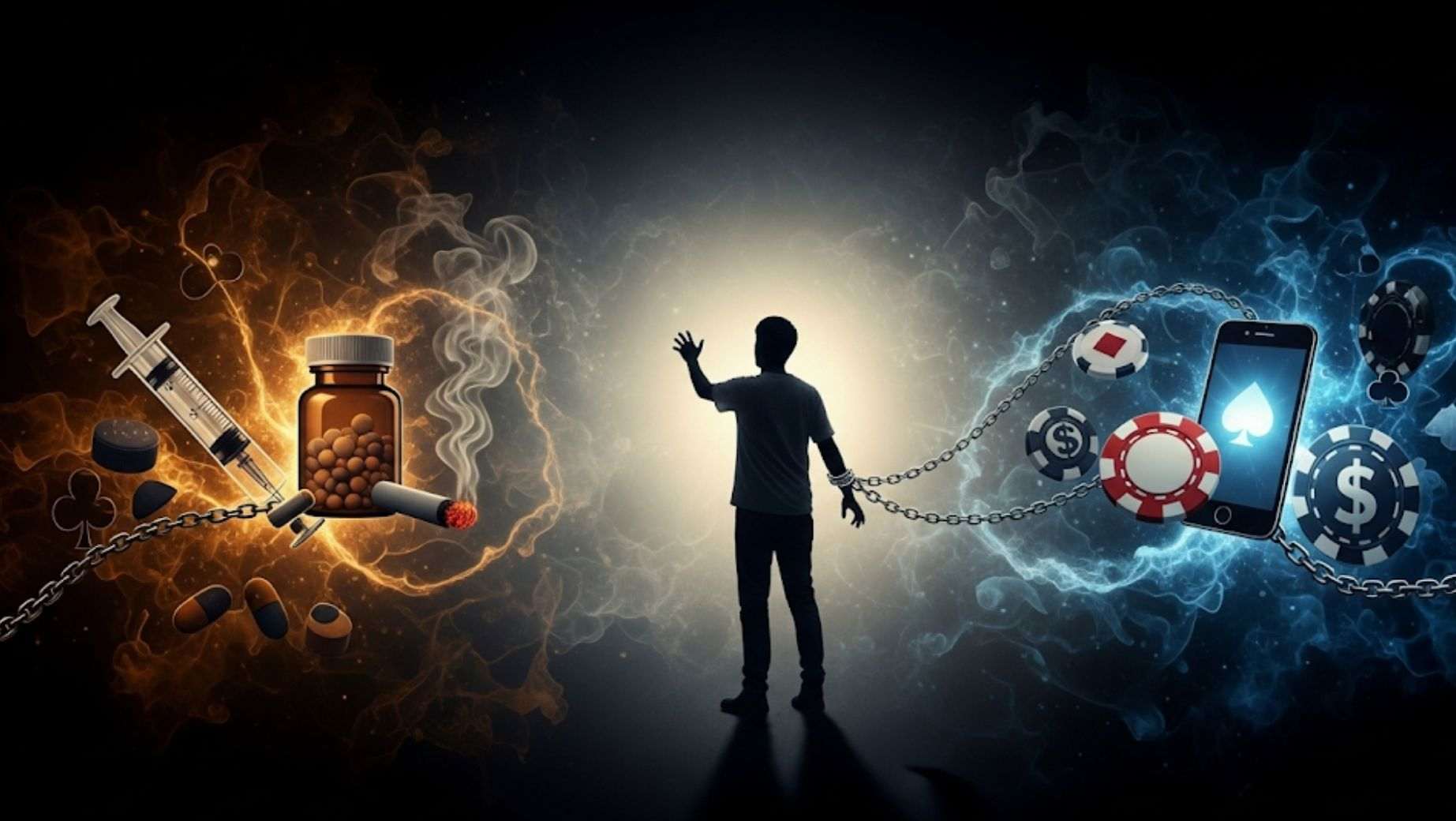
What is addiction?
First of all, let’s define what addiction actually is. Addiction (or technically “substance/behavior use disorder”) is a state in which a person has difficulty stopping a certain behavior or substance, even though it causes problems. It can be:
-
Chemical addiction – e.g., to alcohol, drugs, medications, or pills.
-
Behavioral (non-chemical) addiction – for example, gambling, internet use, shopping, exercising, or social media. Both forms affect the brain in a similar way.
Diagnostic criteria according to DSM-5
According to the current professional classification DSM-5 (American Psychiatric Association), addiction is assessed using 11 criteria, falling into four main areas:
-
Loss of control
-
Using or engaging in the behavior for longer periods or in larger amounts than intended.
-
Unsuccessful attempts to reduce the behavior or consumption.
-
Spending a great deal of time on the activity (obtaining the substance, preparation, recovery).
-
Strong urge, known as craving.
-
Social impact
-
Inability to fulfill obligations at work, school, or home.
-
Continuing the behavior despite conflicts with loved ones.
-
Reducing or giving up previous interests due to addiction.
-
Risky behavior
-
Using in dangerous situations.
-
Continuing behavior despite knowing its harmful effects.
-
Pharmacological signs
-
Tolerance (need for a higher dose for the same effect).
-
Withdrawal symptoms (physical or psychological discomfort occurs when stopping).
The severity of addiction is then determined by the number of criteria met:
- Mild disorder: 2–3 criteria
- Moderate: 4–5
- Severe (i.e., “addiction”): 6 or more
Behavioral addictions and what to imagine under that?
Behavioral addictions, even though they often do not cause physical withdrawal symptoms, have significant impacts on quality of life:
- Typically, it is compulsive behavior that continues despite negative consequences, i.e., it disrupts relationships, work, finances, and mental health.
For example, modern studies on TikTok have shown that users with a high likelihood of addiction return to the app more frequently and have a strong urge to check content, similar to substance use.
Interesting study
According to extensive research by the National Institute on Drug Abuse (NIDA), addiction affects the brain similarly to other chronic diseases, e.g., diabetes or asthma. Changes occur in brain areas that control motivation, reward, and self-control. This explains why willpower alone is often not enough and why professional help is needed.
A 2018 study published in The Lancet Psychiatry also showed that addiction does not always have to involve substances. We are therefore talking about so-called behavioral addictions, e.g., gaming, social media, or gambling, which have similar neurological patterns as drug addiction.
Why does addiction occur?
The causes of addiction are complex and include a combination of:
- Biological predispositions, e.g., genetics (40–70% of risk variability is hereditary) or personality (impulsivity, sensation seeking).
- Social environment, mental disorders (e.g., anxiety, depression), stress, or the availability of a substance or activity.
Most common signs of addiction
If you are not sure whether you are addicted, try answering these questions:
-
Do I need more and more?
Whether it’s alcohol, sugar, gaming, or training, if you need a larger dose or longer time to feel the same effect, it could be tolerance, which is a typical sign of addiction.
-
Do I have withdrawal symptoms?
Nervousness, irritability, sweating, headaches, or sadness when you “don’t get your fix” are warning signals.
-
Does it affect my life?
Have relationships, work, health, or financial situations worsened because of it? If so, this is an important sign that the problem is getting out of hand.
-
Am I losing control?
Do you promise yourself “just a little today” or “just one drink today,” but it ends completely differently? Repeatedly breaking your own rules is a clear red flag.
-
Do I continue even though I know it harms me?
This may be the most prominent sign. You are aware of the consequences but cannot stop.
If you notice 2–3 of these in yourself or someone else, it may indicate a mild disorder. More than 6 is considered classic addiction.
How to fight addiction?
-
Self-reflection – admitting the problem is the first and hardest step.
-
Support from others – confide in someone you trust.
-
Professional help – a therapist, addiction specialist, or support group can help set a strategy and motivation.
-
Gradual changes – complete abstinence may not be possible immediately. For some addictions, gradual reduction helps.
-
Support with natural supplements – some substances can relieve withdrawal symptoms and reduce stress or anxiety. The most effective include Rhodiola rosea (helps resist psychological stress), Ashwagandha (reduces anxiety and tension), and B-complex vitamins with magnesium (support nervous system regeneration and improve mood and sleep). These supplements do not replace professional treatment but can effectively complement it.
Conclusion
Addiction is not just about drugs. It can be activities that were originally enjoyable but, when they take over, have a destructive impact. It is important to notice warning signals in time and not hesitate to seek help: professional, psychological, or support from loved ones.