_(1).svg)
Long-term use of marijuana is an increasingly common topic among experts and the public. But what really happens in our brain when we use it regularly and over a long period? If you are interested in how marijuana can affect memory, attention, motivation, or even mental health, keep reading.
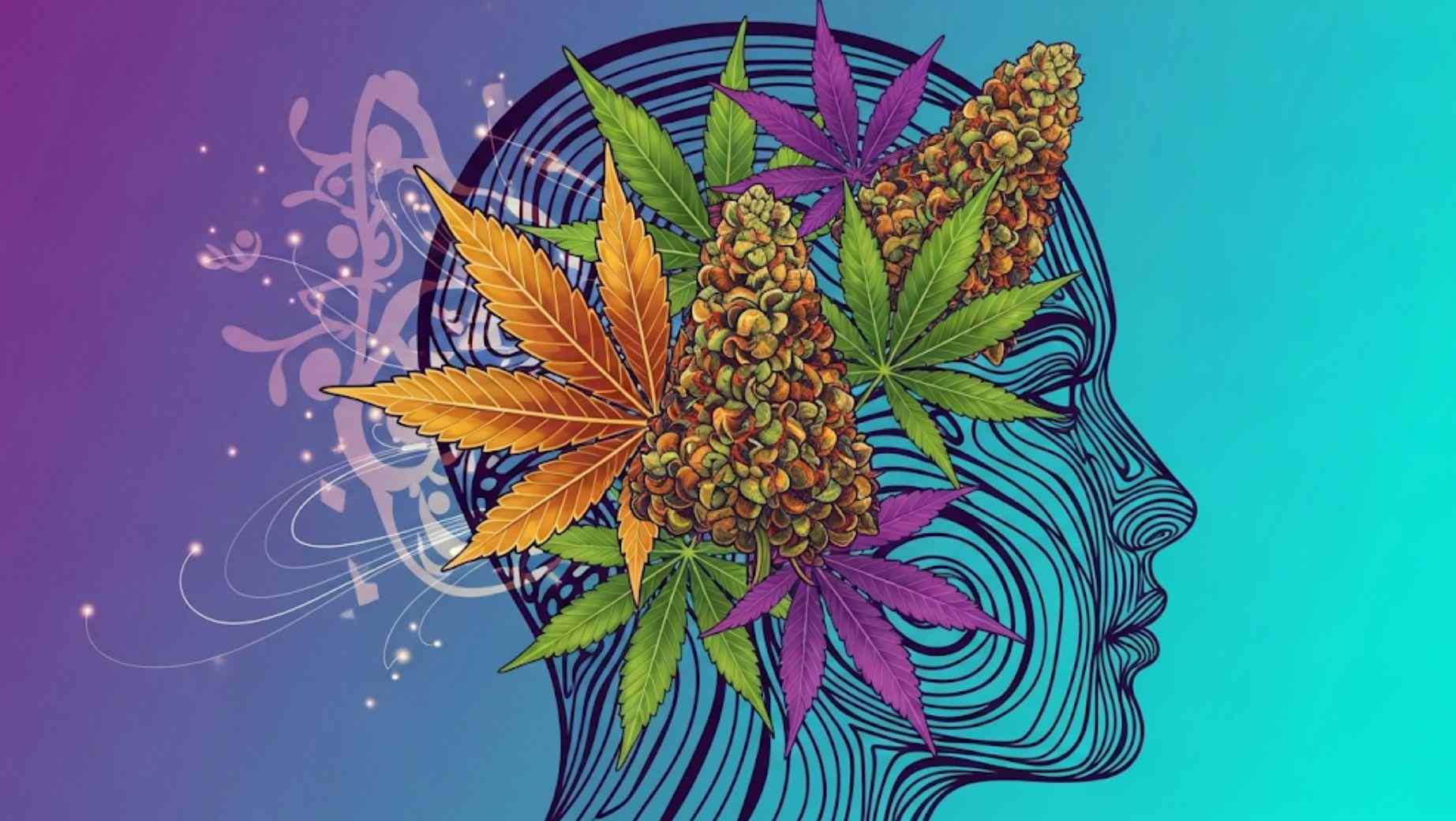
Marijuana and the brain
THC is the main psychoactive substance contained in the cannabis plant. It is THC that is responsible for the changes in consciousness that people often describe as being "high." However, THC and marijuana are not the same. Marijuana is a dried mixture of cannabis flowers, leaves, and sometimes stems that contains many different cannabinoids. Among them is THC, but also CBD and others. THC is only one component of marijuana, but also the most well-known and the one that affects the brain the most strongly.
With long-term use, THC can change some parts of the brain. But how much and how permanently depends on many factors: age, frequency of use, potency of the substance, and genetic makeup.
Negative effects
Let’s now focus on the negative effects that science has already confirmed.
1. Memory and attention
One of the first signs of long-term marijuana use is impaired memory. It’s not just about forgetting where you put your phone. It concerns the so-called short-term and working memory. This means the ability to concentrate, plan, or remember something for more than two minutes.
-
A study published in JAMA Psychiatry (2022) showed that people who use marijuana regularly have weakened activity in the prefrontal cortex, i.e., the part of the brain that controls planning, decision-making, and specifically memory.
-
Studies (e.g., Meier et al., 2012) showed that people who started regular use in adolescence may experience a permanent IQ drop of 6 points. Adults often do not have this effect or it is temporary.
2. Motivation and brain fog
Do you know that feeling when you don’t want to do anything? Some long-term marijuana users develop amotivational syndrome. What is it? It is a loss of interest, apathy, lack of drive, attention disorders, and emotional numbness. Researchers from the University of Cambridge (2021) examined brain activity in heavy users and found that THC reduces reward response.
3. Addiction
Although it is often said that “you don’t get addicted to weed,” frequent users exhibit signs of addiction such as irritability, insomnia, restlessness. According to the American Psychiatric Association data, addiction develops in up to 20% of daily users.
4. Mental risks
In sensitive individuals, especially those with a genetic predisposition, marijuana can increase the risk of psychotic episodes or anxiety. Research (e.g., Hjorthøj et al., 2023) shows a connection between high THC consumption and the development of schizophrenia in young men.
Possible positive effects of long-term use
Marijuana is not just "evil." Many people use it to manage pain, stress, or insomnia. And science supports this in some areas:
1. Relief from pain and spasms
Although THC is psychoactive, it can help patients with chronic pain, multiple sclerosis, or spasms. For some patients, it works better than classic analgesics – and without side effects like opioid addiction.
2. Sleep support
Some users report improved falling asleep and deeper sleep. Short-term, THC can indeed shorten the time needed to fall asleep. However, with long-term use, this effect reverses in some individuals.
3. Reduction of anxiety and depression
In some people, small doses of marijuana have anxiolytic effects (against anxiety). However, dosage is important because high doses of THC can worsen anxiety.
Who should be more careful?
Marijuana affects everyone’s brain differently, but higher-risk groups are:
- Teenagers and young adults – the brain develops until about age 25 and THC can disrupt development (memory, IQ, emotional stability).
- People with mental disorders or predispositions – there is a risk of worsening mental state or triggering psychosis.
- Daily and long-term users of strong strains – there is a risk of developing addiction and loss of motivation (so-called amotivational syndrome).
Are there gentler alternatives?
If you want the effects of marijuana without the psychoactive “high,” CBD (cannabidiol) is a great choice. It does not alter consciousness, is non-addictive, and still has many benefits:
- Helps with anxiety and stress
- Relieves pain and inflammation
- Supports sleep
- May protect the nervous system (neuroprotection)
Unlike THC, it does not impair memory or cognitive functions and is legal in most countries.
Conclusion: Balance is key
Marijuana is not a dangerous demon, but neither is it a harmless herb. Long-term use can bring relief but also risks, especially if started too early or used in high doses.
If you are looking for a natural way to calm down and get relief without altering consciousness, CBD can be a healthier and safer alternative.
Author: Adél