_(1).svg)
Kratom is a plant that has gained a lot of attention in recent years, even in Europe. Thanks to its effects, users order it, but have you ever wondered if kratom can be grown at home? The answer is yes, but you need to be prepared for it. Let’s reveal how to grow kratom at home, what you need for it, and what to watch out for.
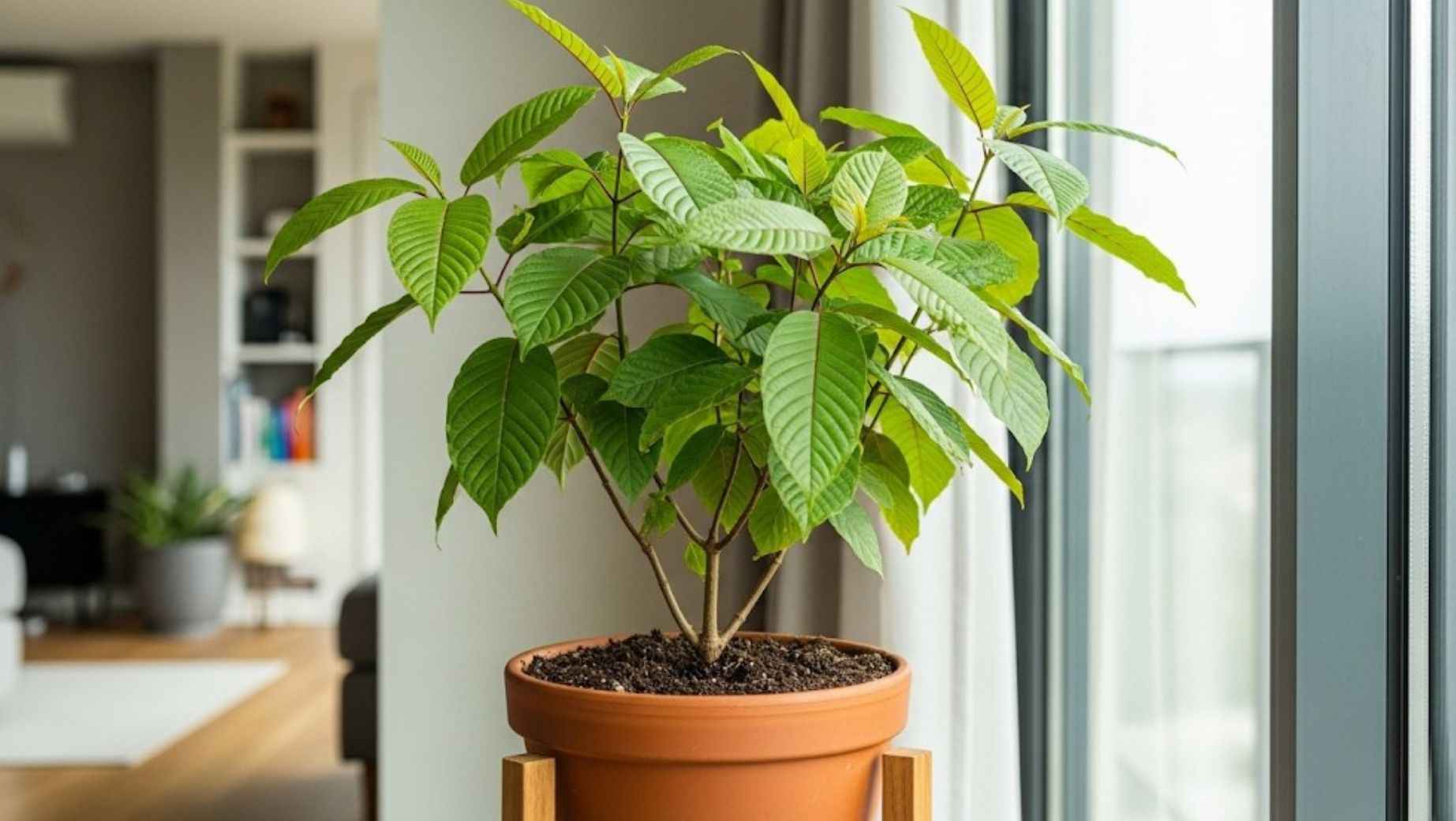
What is kratom and where does it naturally grow
Kratom or Mitragyna speciosa is a tropical tree originating from Southeast Asia, mainly from Thailand, Indonesia, and Malaysia. In the wild, it grows up to 15 meters tall. Its leaves contain active alkaloids, mainly mitragynine and 7-hydroxymitragynine.
Growing kratom at home is a challenge mainly because the plant needs specific tropical conditions. However, if you can replicate them, you can manage it even in an apartment or a winter garden.
Growing kratom at home: step by step
As already mentioned, growing kratom at home is not an easy task, but it’s not impossible either. Let’s go over what you need to know to grow kratom at home.
1. Seedlings or seeds?
Kratom seeds quickly lose their germination capacity, within just a few days after harvest. If you don’t have access to extremely fresh seeds, it’s recommended to get a small seedling right away. This will save you time and increase your chances of success.
For more advanced growers, there is also the option to use cuttings of kratom, meaning usually a stem or a branch. This is a form of vegetative propagation, resulting in a genetically identical copy of the original plant, also known as a clone. Seeds have very low germination rates — it’s estimated that fresh seeds have about 20% germination and dried ones only about 10%.
2. Prepare the right substrate
Kratom likes light, well-draining and nutrient-rich soil. Use a permeable substrate rich in nutrients. An ideal mix is peat, perlite, and compost. The pot should have good drainage, as kratom doesn’t like waterlogging.
3. Maintain tropical conditions for kratom
The plant needs temperatures between 22–30 °C. In winter, protect it from cold, drafts, and dry air. It’s ideal to place kratom in a small greenhouse, a grow box, or use a humidifier. Humidity should be as high as possible, ideally above 60%.
As for light, kratom likes it. It prefers bright but diffused light. Direct sunlight can burn it, while low light slows growth. Therefore, partial shade is ideal, or use shade cloth when growing outdoors. Indoors, LED or fluorescent lamps can be used as supplemental lighting.
4. Watering and fertilizing
Water carefully and regularly. Kratom needs consistent but not excessive watering. Water with soft water and check if the soil is drying out too quickly. Fertilizing is important, as the plant appreciates organic fertilizers with a higher nitrogen content.
5. Growth, pinching, and pest protection
Young plants need protection and suitable conditions during maturation. Once they reach a certain size, pinch the tops to encourage richer branching and a denser crown.
Watch the leaves. If they turn yellow or start to wilt, it may be due to nutrient deficiency, low humidity, or even pests. Common pests include aphids, mites, or whiteflies. Consider integrated pest management (avoid overfertilizing, keep the area clean, or introduce predators like ladybugs).
When and how to harvest kratom
Once the plant grows to at least one meter tall and has enough healthy leaves, you can start harvesting. The best leaves are the largest and dark green. They are dried in the shade, in a dry place, ideally at a temperature of around 25 to 30 °C. Avoid direct sunlight, as it can reduce the potency of the alkaloids.
What to watch out for when growing kratom
- Kratom does not tolerate cold – it starts to suffer below 15 °C.
- Sensitive to environmental changes – sudden relocations can cause leaf drop.
- Prone to pests – especially indoors. Watch out for aphids and mold.
- It’s quite a “spoiled” plant – don’t expect it to grow like a nettle.
Most common mistakes when growing kratom
- Insufficient air humidity
- Low temperature (the plant suffers below 15 °C)
- Waterlogged substrate
- Placement in direct sunlight
- Insufficient fertilization
Kratom is sensitive to conditions, but if you take care with its environment, it will reward you with a beautiful and strong plant.
Conclusion: Is it worth growing kratom at home?
If you can create stable tropical conditions, i.e., enough humidity, warmth, nutrients, and ventilation, then growing kratom at home is not only possible but also satisfying. The result is a beautiful plant and your own supply of dried leaves.
Author: Dominik