_(1).svg)
Nowadays, more and more people are interested in natural alternatives to increase energy, focus, or improve mood. Among these natural alternatives are mainly kratom and matcha. Both kratom and matcha have a reputation as "natural stimulants," but they come from completely different plants, have different effects, and various uses. So let's answer what the main differences between kratom and matcha are, what their effects are, and what benefits they bring?
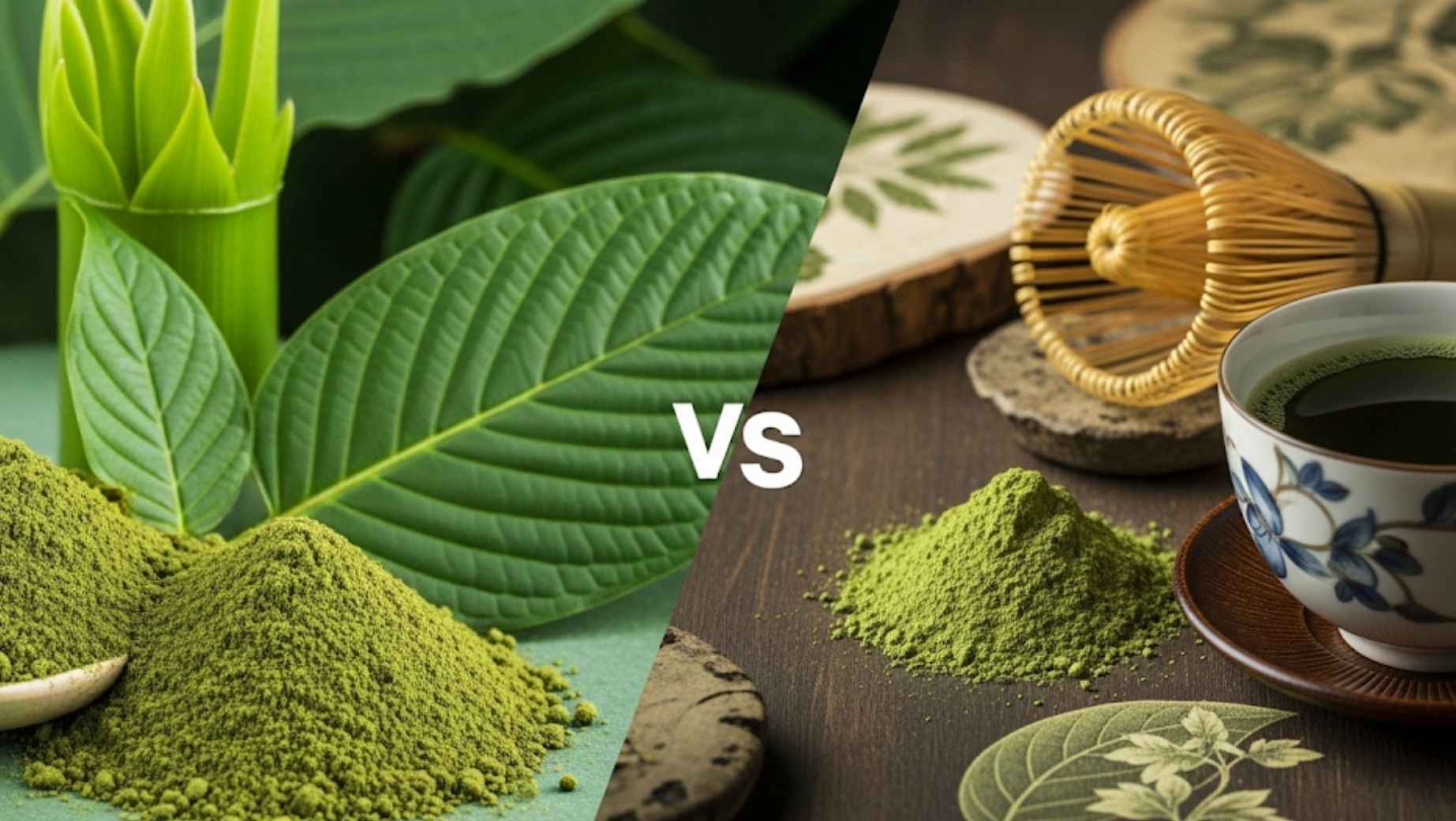
What is kratom?
Kratom or in Latin Mitragyna speciosa is a tropical tree that grows mainly in Southeast Asia. Kratom leaves contain alkaloids, mainly mitragynine and 7-hydroxymitragynine, which affect the central nervous system. Traditionally, kratom is used in these areas as a natural stimulant and also as a mild analgesic, i.e., a natural painkiller.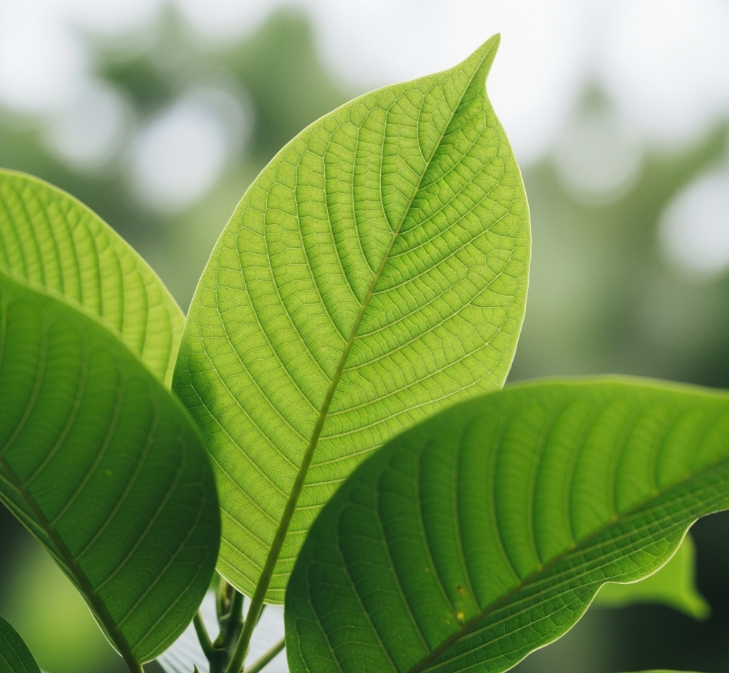
Effects of kratom
Kratom has a dual effect, depending on the dose:
- Low doses (1–5 g): At a lower dose, kratom acts rather as a stimulant. Users feel increased energy, better focus, more motivation to work, and improved mood.
- Higher doses (5–15 g): Conversely, at a higher dose, kratom has sedative effects, which can help with pain relief, improved sleep, and relaxation. At this stage, it may also act as a mild anxiolytic, i.e., against anxiety.
Moreover, kratom's effects may differ depending on the selected type of kratom (green, white, and red kratom). Kratom is also used to manage withdrawal symptoms in people addicted to opioids.
What is matcha?
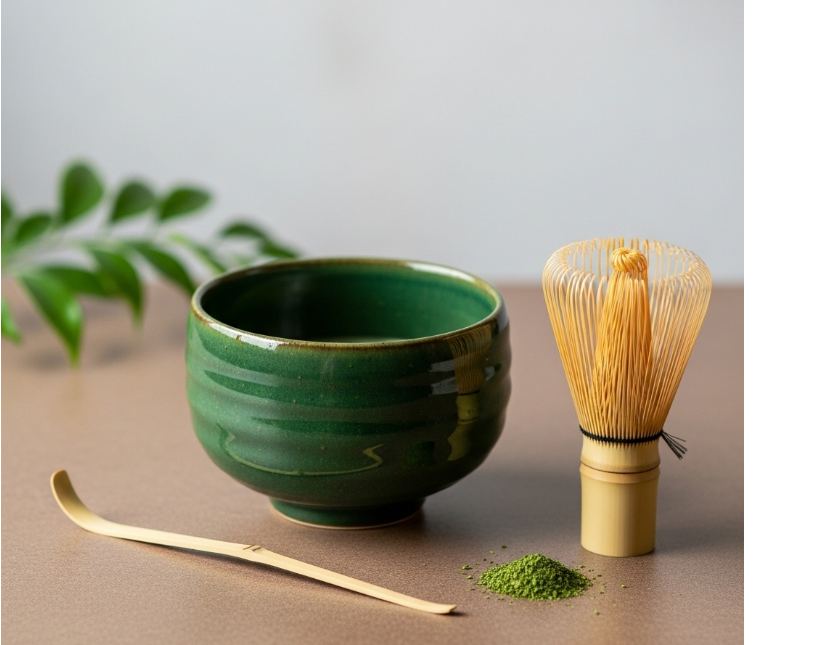
Matcha is a special type of Japanese green tea, made from finely ground leaves of the tea plant Camellia sinensis. Unlike regular green tea, matcha preparation uses not only the infusion but the whole ground leaf. What does this mean? It means the body absorbs much more nutrients, antioxidants, and caffeine. Matcha is known for its stimulating as well as relaxing effects thanks to its content of L-theanine.
 Effects of matcha
Matcha contains caffeine, which provides the body with energy. However, because it contains L-theanine, it also has a calming and balancing effect. Because of this:
- Improves attention and cognitive functions without causing nervousness or shaking.
- Supports relaxation and reduces stress.
- Has a high antioxidant content, which protects cells from damage and supports immunity.
- Supports metabolism and may aid weight loss.
Differences between kratom and matcha
1. Origin and composition:
Kratom is the leaf of a tropical tree with alkaloids affecting the nervous system, while matcha is a powdered green tea with high antioxidant and amino acid content from Japan.
2. Effects:
Kratom can be either a stimulant or a sedative depending on the dose and the selected type of kratom. Matcha is a mild stimulant with a calming effect due to the combination of caffeine and L-theanine.
3. Legality and safety:
Matcha is widely available and legal in most countries. Kratom has restrictions or is banned in some states due to potential misuse and risks. Additionally, kratom may have more side effects compared to the mentioned matcha.
4. Form of use:
Matcha is commonly prepared as tea or as a Matcha Latte. Kratom is most often used in the form of powder, capsules, or extract.
Kratom & Matcha: Benefits
The main positive benefits of kratom include that it:
- May help increase energy and endurance during work or physical activity.
- Provides pain relief and muscle tension relief.
- Reduces anxiety and stress.
- Helps with managing withdrawal symptoms.
Matcha's main benefits are that it:
- Increases mental alertness and focus without nervousness.
- Supports relaxation and improves mood.
- Has a high antioxidant content, which fights aging and inflammation.
- Helps regulate metabolism and supports weight loss.
- Is naturally detoxifying and supports liver health.
Kratom vs. Matcha
|
Category |
Kratom |
Matcha |
|
Origin |
Tropical tree (Mitragyna speciosa) |
Japanese green tea (Camellia sinensis) |
|
Main ingredients |
Alkaloids (mitragynine, 7-hydroxymitragynine) |
Caffeine, L-theanine, antioxidants |
|
Effects |
Stimulant or sedative (depending on dose) |
Mild stimulant with calming effect |
|
Main benefits |
Energy boost, pain relief, anxiety reduction |
Improved focus, relaxation support, antioxidants |
|
Form of use |
Powder, capsules, extract |
Powder (tea, smoothie) |
|
Legality |
Restricted or banned in some countries |
Legal and widely available |
|
Risks/side effects |
Potential for addiction, nausea, dizziness |
Generally safe, may contain caffeine |
|
Recommended use |
Cautiously, considering dosage and legislation |
Daily drinking as part of a healthy lifestyle |
Author: Adél