_(1).svg)
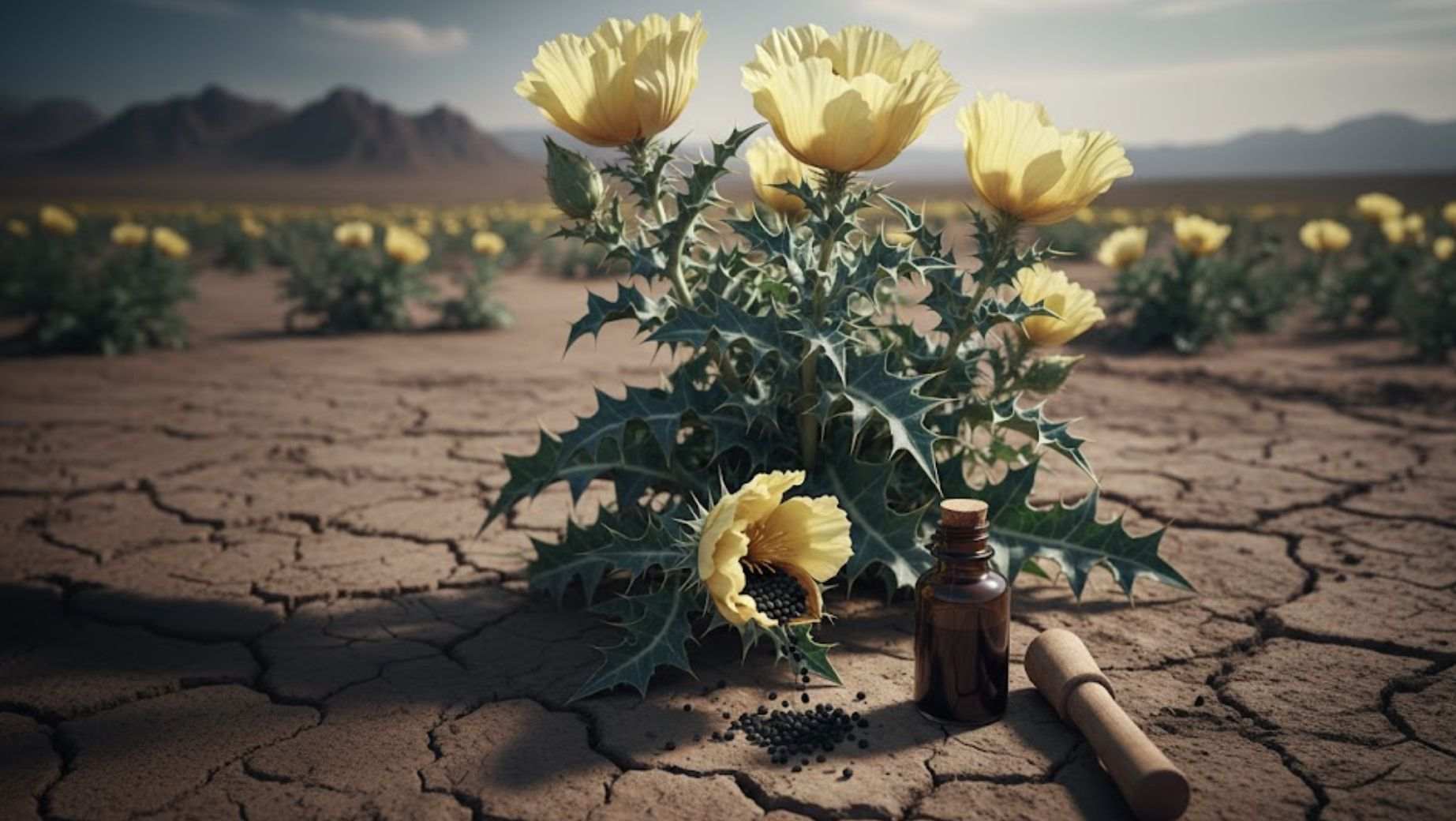
Imagine a beautiful yet treacherous plant that can pose a threat to health. We are talking about the Mexican Prickly Poppy (Argemone mexicana), known for its yellow flowers and prominent thorns. Although it looks decorative, it hides toxic substances in its leaves and seeds that can be dangerous to humans. Why is the Prickly Poppy considered a risky plant and what are its effects?
What is the Mexican Prickly Poppy (Prickly Poppy)?
Prickly Poppy, known in Czech as pleskanka mexická, is a herb from the poppy family (Papaveraceae), commonly known as prickly poppies. It originates from Mexico and Central America but has spread to India, Africa, and other tropical regions. It can grow up to one meter in height and is characterized by spiny leaves, yellow latex, and striking poppy-like flowers.
At first glance, you might mistake it for the common opium poppy. However, the difference is crucial: Prickly Poppy does not contain morphine but alkaloids that can be toxic to humans.
Chemical composition: both power and risk
The plant contains a range of bioactive alkaloids that have strong effects on the body. The most important include:
- Sanguinarine – has strong antimicrobial effects, but in higher doses is toxic to the liver.
- Dihydrosanguinarine – affects heart function and the nervous system.
- Berberine and Protopine – substances with potential effects on blood pressure, digestion, and inflammation.
- Argemonine – a lesser-known alkaloid that can affect the central nervous system.
These substances have therapeutic potential, but also toxic limits. The difference between a medicinal and a dangerous dose is very small.
Why is Prickly Poppy considered dangerous?
The main reason is its toxicity. Improper use can cause serious health complications. Particularly dangerous is the ingestion of oil from its seeds, which was historically mistakenly used as a substitute for edible oil.
1. Historically known poisonings
In India and some African countries, there have been mass poisonings when Prickly Poppy oil was mixed with mustard oil.
This phenomenon is called epidemic dropsy and manifests as swelling of the legs, breathing difficulties, liver damage, and heart problems. The cause is the presence of the alkaloid sanguinarine, which disrupts cellular respiration.
2. Contact with the plant
Even mere contact with the plant can cause skin irritation, rashes, or allergic reactions. The latex is considered highly irritating.
Traditional uses – between medicine and poison
Despite its reputation, Prickly Poppy is part of traditional medicine, especially in India, Mexico, and Africa. In small doses, it is used for its analgesic, antiparasitic, and antibacterial properties.
Traditionally, it was used:
- for toothaches and headaches,
- for skin treatment (eczema, ulcers, infections),
- for fever and colds,
- as a natural laxative.
However, modern science warns that without precise dosing and professional supervision, its use is risky.
How does Prickly Poppy affect the body?
In small doses, alkaloids from Prickly Poppy can:
- relieve pain,
- have mild sedative effects,
- improve blood circulation,
- support immune responses.
In higher doses, however, enzyme inhibition, liver damage, and heart muscle injury can occur, which can be life-threatening.
Prickly Poppy: Medicine or poison?
|
Effect / Dose |
Low (traditional) |
High (toxic) |
|
Nervous system |
Calming, pain relief |
Dizziness, cramps, drowsiness |
|
Digestive tract |
Supports digestion |
Vomiting, diarrhea, cramps |
|
Cardiovascular system |
Mild blood pressure reduction |
Arrhythmia, swelling, collapse |
|
Liver |
Detoxification (small amounts) |
Liver damage, jaundice |
|
Skin |
Disinfection, wound healing |
Irritation, dermatitis |
Modern research and safety recommendations
Current research is exploring the potential of isolated compounds from Prickly Poppy in medicine, especially as antimicrobial and anticancer agents. However, sufficient clinical studies confirming its safe therapeutic use are not yet available.
Recommendations:
- Do not use the plant internally without professional supervision.
- Avoid consuming any oil or extract from its seeds.
- When in contact with latex, wash hands thoroughly and avoid contact with eyes.
Conclusion
Prickly Poppy (Argemone mexicana) is a fascinating paradox of nature. The Mexican Prickly Poppy is a plant that can be both a medicine and a poison. Its striking beauty hides the power of alkaloids that can help in small doses but harm even slightly higher doses.
If you are drawn to the world of natural plants, keep in mind that not everything that blooms is harmless.
Author: Adél