_(1).svg)
China is home to one of the richest tea cultures in the world. Among its most fascinating representatives are Pu Erh and Oolong. How do they differ? Which is better for digestion and which for relaxation? If you’re unsure which to choose, we’ve prepared a clear comparison of these two tea gems, both available in our selection.
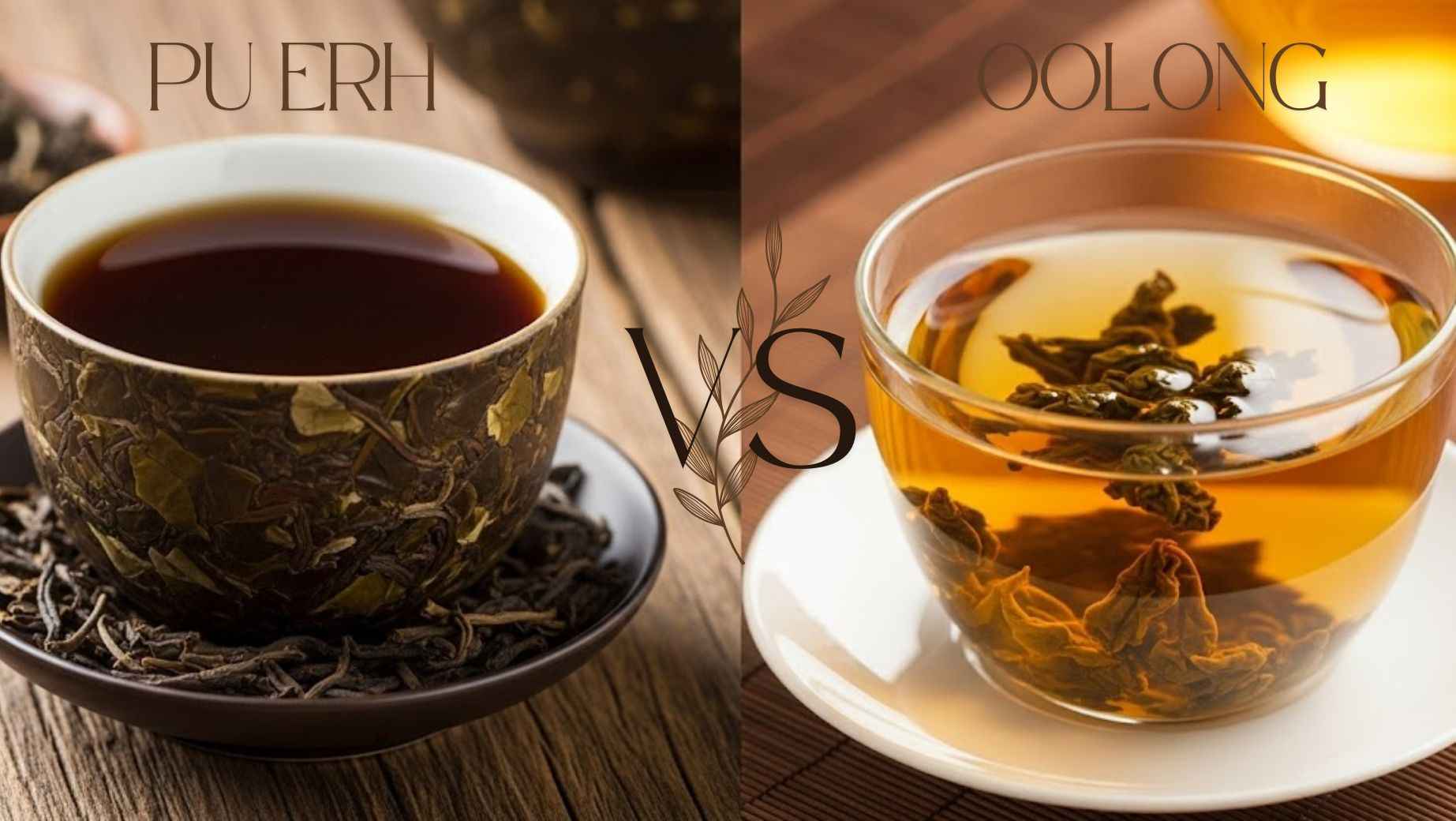
Pu Erh
Pu Erh is a dark, fermented tea that matures similarly to wine. The older it is, the smoother and richer it becomes. It comes from the Yunnan province and is often referred to as the "tea of emperors." Its taste is strong, earthy, with notes of wood, wet soil, and sometimes even a hint of smoke.
Effects of Pu Erh Tea
-
Digestive support: Pu Erh is traditionally drunk in China after meals, as it helps break down fats and stimulates the digestive tract. It’s excellent after heavy or fatty meals. If you want to know more about when and how to drink this tea, see the article: When to drink and how to prepare Pu Erh tea
-
Cholesterol reduction: Studies suggest that regular consumption of Pu Erh can help reduce levels of “bad” LDL cholesterol and improve blood lipid profiles.
-
Detoxification: Thanks to probiotic fermentation, Pu Erh has a positive effect on gut microbiota, cleanses the body, and supports natural detoxification.
-
Metabolism boost: Many people drink it to support weight loss. It contains caffeine, but its effect is mild and long-lasting — no coffee-like spikes.
-
Feeling of satiety: Some people feel less hungry after drinking Pu Erh, which can be helpful when trying to lose weight.
Interestingly, Pu Erh is often better tolerated than strong black tea and doesn’t irritate the stomach — on the contrary, it soothes it.
Summary of Pu Erh Tea
-
Taste: intense, earthy, sometimes slightly smoky. More aged variants have a gentler and smoother profile.
-
Appearance: dark leaves, the infusion has a deep mahogany color.
-
Effects: supports digestion, helps lower cholesterol levels, and may aid in weight loss. Often drunk after meals.
-
Specifics: fermentation brings not only a unique taste but also benefits for the microbiome.
Oolong
Oolong is a tea that stands between green and black tea. It is only partially oxidized, which gives it its exceptional taste — mild, buttery, sometimes fruity or lightly roasted. It originates from the provinces of Fujian and Guangdong, and in China it is often associated with longevity and beauty.
Effects of Oolong Tea
-
Metabolism support: Oolong is popular among people looking to speed up fat burning. It helps the body use energy more efficiently and supports a lean figure.
-
Improved focus: Contains caffeine, but in a lower dose than coffee. It stimulates without causing nervousness.
-
Antioxidants: It is full of polyphenols that protect cells from damage by free radicals and slow down aging.
-
Calming the nervous system: Oolong has a relaxing effect. It helps with stress and fatigue, relieves tension, and supports mental balance.
-
Healthy skin and bones: In China, it is also drunk to support skin health and bone density.
In terms of flavor, Oolong is more variable. Some types taste like spring flowers, others like roasted chestnuts. Every cup is a new experience.
Summary of Oolong Tea
-
Taste: mild, floral, sometimes fruity or buttery. Depends on the type and degree of oxidation.
-
Appearance: rolled or twisted leaves, the infusion ranges from golden to amber color.
-
Effects: improves concentration, supports metabolism, and is often recommended for moments of peace and relaxation.
-
Specifics: due to its versatility, it is ideal for both beginners and advanced tea lovers.
Which tea is right for you?
Both teas are great—it depends on what you expect from your cup:
- Looking for something to support digestion, detox, and metabolism? Go for the earthy and bold Pu Erh.
- Craving harmony, a gentle taste, and energy without overstimulation? Try the elegant Oolong.
The ideal solution? Try both. Have Oolong in the morning for a fresh start and choose Pu Erh after meals for calm digestion.
In our e-shop, we offer carefully selected teas directly from Chinese provinces. Whether you prefer the strong tones of aged Pu Erh or the light floral elegance of Oolong, we’ve got something for you.