_(1).svg)
Where does most of the world’s kratom actually come from? With rising global demand, knowing the top producing regions is more important than ever. This article ranks the top 10 kratom-producing regions by volume so you can better understand where your kratom originates. Keep reading to discover which areas truly dominate the market.
Short summary:
The top kratom producing regions ranked by volume are led by Indonesia, especially Kalimantan and Sumatra, which account for the largest global share. Other key areas include parts of Malaysia and southern Thailand, where production is growing. These regions together form the backbone of international kratom supply. Their unique climate, skilled farmers, and trade networks make them critical to the industry.
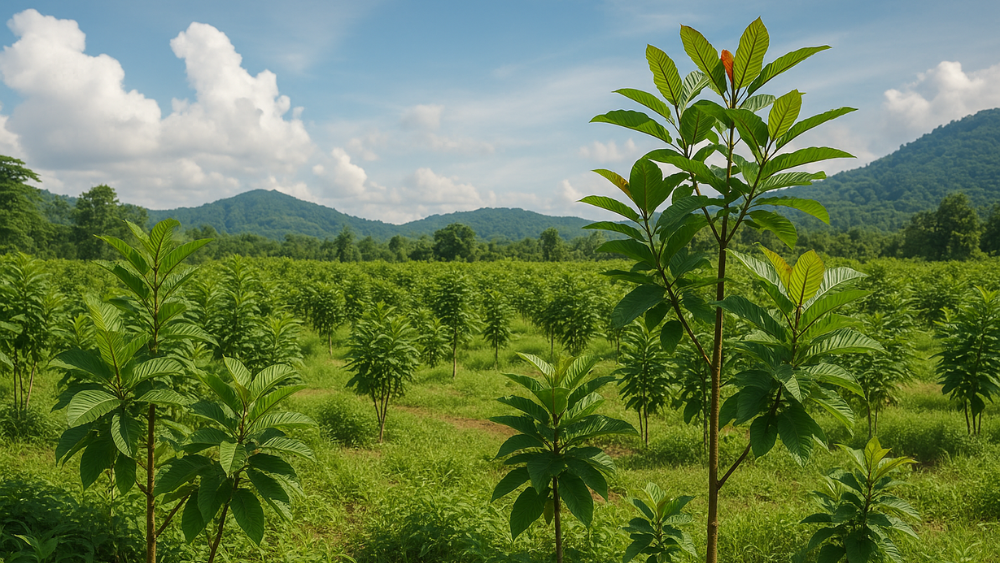
1. Kalimantan, Indonesia
Kalimantan, the Indonesian part of Borneo, is the world’s largest kratom-producing area. Here, kratom is cultivated in vast forest-garden systems, blending traditional farming with modern export demands. The combination of tropical rainfall, nutrient-rich soil, and long experience with agroforestry creates ideal conditions for kratom growth.
Thousands of smallholder farmers in Kalimantan depend on kratom as their main source of income. They typically harvest mature leaves, sun-dry them, and sell to local collectors who organize large-scale shipments for global distribution. The port of Pontianak (in West Kalimantan) handles a major share of this trade.
Kalimantan’s production volume is unmatched globally, estimated to supply over 70 % of the world’s kratom leaf exports.
2. West Kalimantan
Within Kalimantan, the province of West Kalimantan deserves its own spotlight. This area is home to a dense network of kratom growers, often working in family-run operations. The local knowledge of selective harvesting and careful drying preserves leaf potency and color consistency, which is highly valued on the international market.
Regions like Kapuas Hulu and Sintang within West Kalimantan have become famous for high-quality kratom leaves. Transportation by river systems remains crucial here, as many villages are not fully connected by roads.
3. Sumatra, Indonesia
Sumatra is another powerhouse in Indonesia’s kratom industry. The island benefits from consistent rainfall, fertile volcanic soil, and a well-developed transportation network, allowing easy shipment of kratom from inland regions to coastal ports.
Sumatran kratom is appreciated by wholesalers for its stable leaf profile, often classified into common trade names such as “green vein” or “red vein” types, depending on processing and maturity. In recent years, Sumatra has become a popular alternative source for buyers diversifying away from Kalimantan.
4. Aceh, Indonesia
Aceh, located on the northern tip of Sumatra, is a newer player in large-scale kratom exports. Traditionally an area for coffee and pepper cultivation, Aceh’s farmers have shifted partly to kratom to supplement incomes.
Here, farmers often organize in cooperatives to improve bargaining power and maintain stable prices. Acehnese kratom is typically dried on raised racks, a method that helps protect the leaves from rain and humidity, preserving leaf quality for export.
5. Kapuas Hulu, Indonesia
Although part of West Kalimantan, Kapuas Hulu deserves its own ranking because of its sheer contribution to global kratom volume. The region’s forests and rivers support wild kratom as well as managed cultivation.
Kapuas Hulu’s kratom is known for large leaves and high yield, making it attractive for bulk orders. Many regional collectors set up processing warehouses here to dry, sort, and package the product before sending it to the port of Pontianak.
6. Pontianak, Indonesia
Pontianak itself, the capital of West Kalimantan, is a critical node in the kratom trade. While not a major production area, it is the central consolidation hub for kratom shipments across the province.
Exporters here manage grading, packing, and final testing for contaminants before the product leaves Indonesia. Because of Pontianak’s role as a logistics hub, many buyers from around the world travel here to inspect shipments, negotiate prices, and meet local partners.
7. Johor, Malaysia
Moving outside Indonesia, Johor in southern Malaysia is the largest Malaysian kratom-growing region. Although Malaysia has strict regulations on kratom’s sale and use, the cultivation of Mitragyna speciosa trees itself is legal in some states.
Johor’s climate closely matches neighboring Sumatra, providing suitable conditions for kratom farming. Farmers here mainly supply regional demand, though a small amount may enter international trade through informal channels.
8. Perak, Malaysia
Perak has seen a gradual rise in kratom production, with farmers experimenting with Mitragyna speciosa as an alternative cash crop. Because of shifting attitudes and regulatory changes in Malaysia, Perak’s role in the kratom industry could grow in coming years.
At present, production volumes are modest, but local collectors have begun forming cooperative structures, inspired by successful models in Indonesia.
9. Narathiwat, Thailand
Thailand has deep cultural ties to kratom, which was traditionally used in local communities before decades of prohibition. After recent legal reforms, regions like Narathiwat have restarted kratom cultivation in a more formalized way.
Narathiwat benefits from plentiful rainfall, established farming knowledge, and proximity to Malaysia. It is quickly becoming a significant supplier of fresh kratom leaves for domestic Thai markets and, potentially, for export if regulations evolve further.
10. Satun, Thailand
Satun province, in Thailand’s far south, is another emerging kratom-growing area. While small in overall production compared to Indonesia, Satun’s farmers are reviving traditional techniques of selective harvesting and sun-drying to maintain leaf quality.
Currently, Satun supplies mostly local consumption, but its production capacity is expected to expand if demand continues to grow.
Factors influencing production
Several factors shape kratom production across these top 10 regions:
- Climate: consistent rainfall and warm temperatures are essential
- Soil: fertile, slightly acidic soils encourage healthy tree growth
- Harvesting knowledge: traditional skills passed down among farmers
- Infrastructure: roads, ports, and river transport support efficient trade
- Local regulations: shifting legal status influences market volumes
Understanding these factors helps buyers anticipate seasonal fluctuations, potential price changes, and supply chain risks.
So which regions rank highest in kratom production? Indonesia clearly leads, especially Kalimantan and Sumatra, thanks to ideal growing conditions and experienced farmers. Malaysia and Thailand contribute smaller but steadily increasing volumes. Together, these ten regions supply nearly all of the world’s kratom exports. Their production systems, climate, and infrastructure make them essential to the global supply chain. For buyers and industry professionals, this ranking highlights where to look for consistent sourcing. Understanding these regions helps you make better decisions and navigate market changes. Ultimately, Indonesia remains the undisputed king of kratom production.
Author: Dominik