_(1).svg)
The world of hemp products is constantly expanding, with new discoveries and innovations appearing on the market. After the popularity of CBD, HHC, and THC-P, another cannabinoid is gaining attention — 11-OH-HHC. You may have heard of it but don’t know exactly what it means, how it affects the body, or whether it’s even legal. Let’s explain and help you understand why 11-OH-HHC is becoming such a talked-about topic.
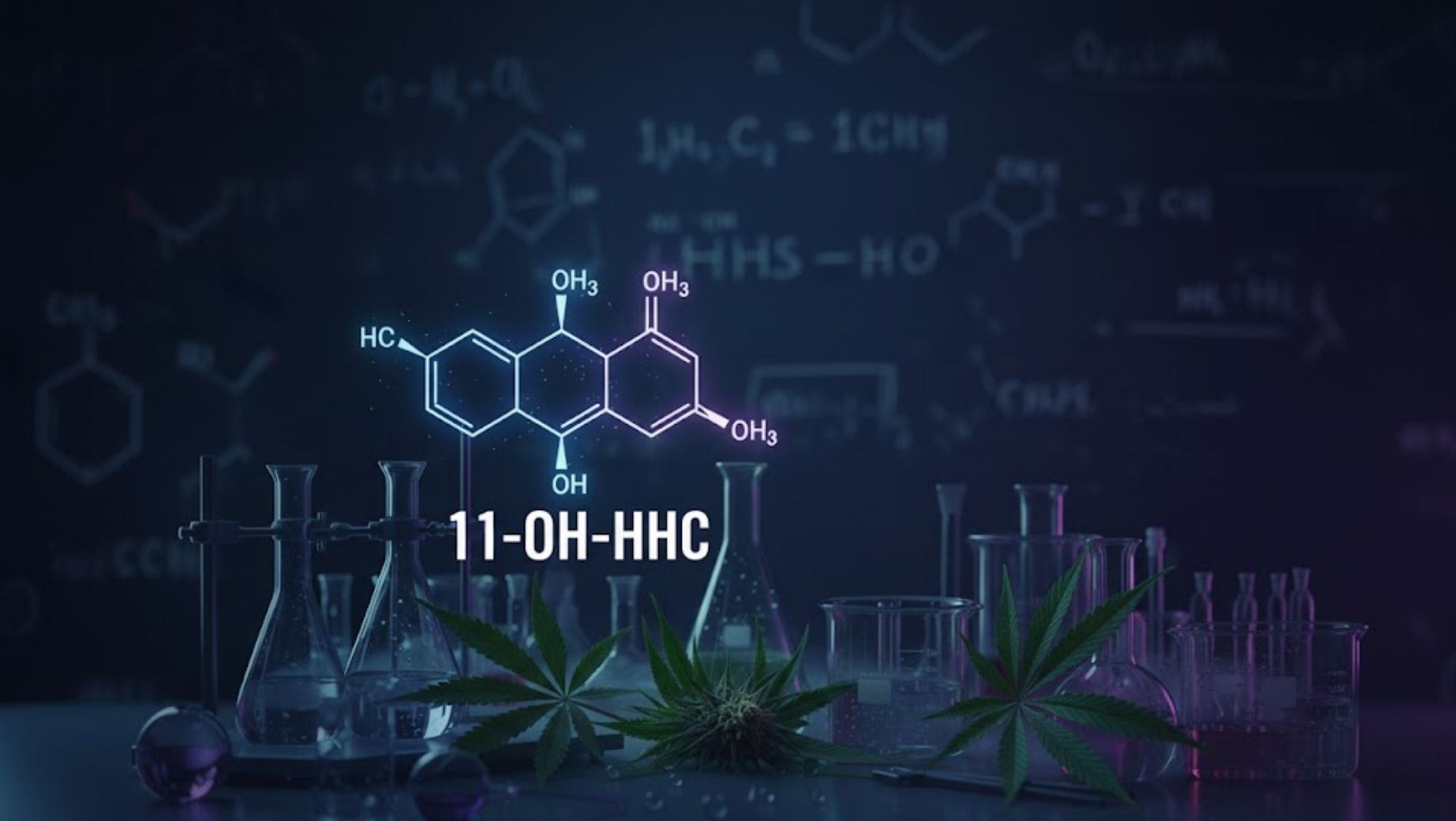
What is 11-OH-HHC?
The abbreviation 11-OH-HHC stands for 11-hydroxy-hexahydrocannabinol. It is a metabolite of HHC (hexahydrocannabinol), a semi-synthetic cannabinoid made from hemp extract, usually derived from CBD obtained from industrial hemp.
Structurally, it is very similar to the more well-known THC, with both substances interacting with the endocannabinoid system, i.e. the complex network of receptors in the human body that affects mood, the nervous system, immunity, and sleep.
Simply put, 11-OH-HHC is the chemically active form of HHC that naturally binds to the same receptors in the body as other cannabinoids.
How 11-OH-HHC is formed
Chemically speaking, 11-OH-HHC is formed by enzymatic oxidation of HHC in the liver. This process is very similar to how the body metabolizes THC, since it also produces 11-hydroxy-THC, which is considered stronger than THC itself.
This similarity between HHC and THC is not a coincidence. Both molecules have a very similar structure and act on the body’s endocannabinoid system, specifically on CB1 receptors in the brain. Thanks to this, 11-OH-HHC has effects that can resemble classic THC, but without the same legal controversy — at least for now.
What are the effects of 11-OH-HHC?
While there are not yet many scientific studies on 11-OH-HHC, user experiences and knowledge of similar cannabinoids suggest several main effects:
1. Euphoria and mood enhancement: It brings a feeling of relaxation, joy and mild euphoria, similar to THC, but with a gentler onset and shorter duration.
2. Physical relaxation: 11-OH-HHC helps reduce tension in the muscles and stress. This effect is often appreciated in the evening or after a demanding day.
3. Improved sleep: Thanks to its calming effects, 11-OH-HHC can help with falling asleep and improve sleep quality without causing a “hangover” the next day.
4. Enhanced sensory perception: 11-OH-HHC may enhance the intensity of sounds, tastes and colors, which is also typical for other psychoactive cannabinoids.
5. Possible pain relief: Since it acts on CB1 and CB2 receptors, 11-OH-HHC may also have analgesic effects, helping to reduce the perception of pain.
Side effects and safety
Although 11-OH-HHC appears to be an interesting compound, it should be used with caution.
Some possible side effects may include:
- Dry mouth,
- Red eyes,
- Increased heart rate,
- Short-term memory impairment,
- Mild anxiety or paranoia at higher doses.
It’s important to remember that everyone reacts differently. It depends on dosage, body weight, tolerance, and the environment in which the substance is used. It’s recommended to start with a very low dose and observe how your body responds.
Is 11-OH-HHC legal?
The legal status of 11-OH-HHC varies by country and often falls into a so-called legal gray area. However, the legislative situation is evolving rapidly, so it’s advisable to monitor current changes.
Comparison: HHC vs. 11-OH-HHC
| Property | HHC | 11-OH-HHC |
|---|---|---|
| Origin | Semi-synthetic cannabinoid derived from CBD | Metabolite of HHC, formed in the body after use |
| Effects | Mild euphoria, relaxation, calm | Stronger effects than HHC, deeper relaxation |
| Onset of effects | Slower | Faster |
| Duration | 2–4 hours | 4–6 hours |
| Potency | Medium | Higher (often described as “more intense HHC”) |
| Possible side effects | Dry mouth, fatigue, mood changes | Similar, but often stronger due to higher activity |
In simple terms, 11-OH-HHC is a more active and potent form of HHC that is more naturally processed by the body and interacts more efficiently with cannabinoid receptors.
Tip: Curious about the difference between 11-OH-HHC and its older sibling 10-OH-HHC? Read our article: 10-OH-HHC vs. 11-OH-HHC
Why are scientists interested in 11-OH-HHC?
The growing interest is due to its unique combination of stability, biological activity, and similarity to natural cannabinoids.
From a scientific perspective, 11-OH-HHC may be important for:
- studying the interaction between cannabinoids and human receptors,
- exploring new ways to regulate the nervous system,
- potential development of therapeutic substances aimed at mental balance, regeneration, and stress resilience.
Laboratories are also monitoring the stability of the molecule, which is relatively high in HHC derivatives, making them interesting candidates for future research.
Summary
11-OH-HHC, or 11-hydroxy-hexahydrocannabinol, is a modern compound from the cannabinoid family that has a structure very similar to THC while maintaining its own unique properties.
From a scientific perspective, it is a potentially significant HHC derivative that naturally binds to the endocannabinoid system and may provide new insights into the functioning of the human body.