_(1).svg)
Does the name mescaline ring a bell? It is one of the oldest natural hallucinogenic substances in the world. Mescaline is not just "some hallucinogen," but a fascinating combination of nature, culture, and the human mind. What exactly is mescaline, where does it come from, and why has it been talked about so much lately? Let’s dive into the world of hallucinogenic cacti and their secrets.
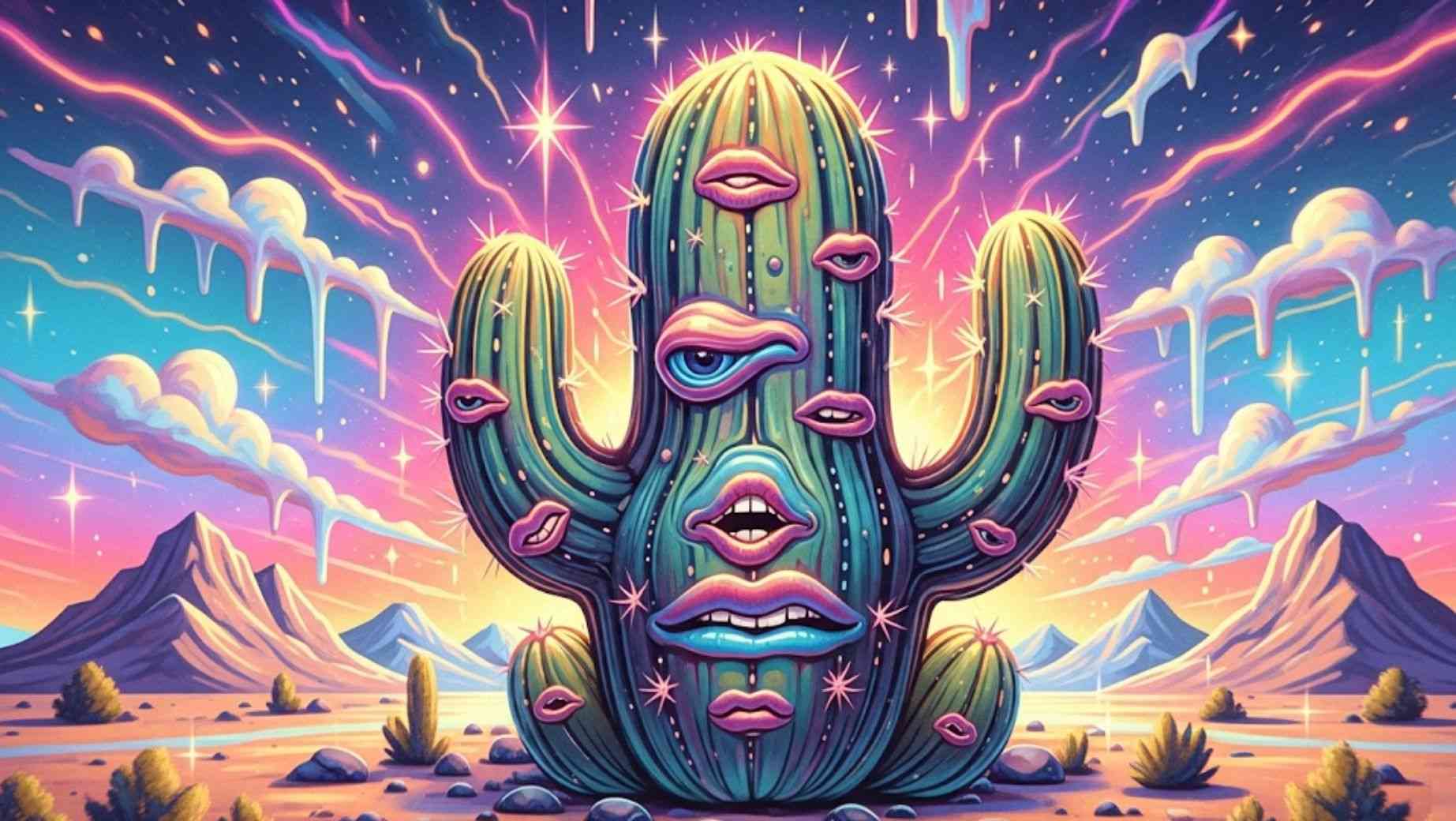
What is mescaline?
As you may have noticed, mescaline is a psychoactive alkaloid that naturally occurs in some species of cacti. It belongs to the so-called psychedelics, i.e., substances that alter perception, thinking and emotions. The effects of mescaline are often described as spiritual, visually intense, and deeply introspective.
Where is mescaline found?
Mescaline is mainly found in these species of cacti:
- Peyote (Lophophora williamsii) – the most well-known mescaline cactus, often used in shamanic ceremonies.
- San Pedro (Echinopsis pachanoi) – a tall columnar cactus originating from the Andes, frequently used in Peruvian rituals.
- Peruvian Torch (Echinopsis peruviana) – similar to San Pedro, also contains mescaline, though in varying amounts.
Cacti usually contain mescaline in low concentrations (0.1–2%), but don’t be fooled. Even a small amount of mescaline is enough to cause strong hallucinations.
How does mescaline work?
We already know that mescaline belongs to psychedelics, substances that alter perception and consciousness. Effects begin 1–2 hours after ingestion and can last up to 12 hours. Typical manifestations include:
- Intense hallucinations (especially visual – colors, shapes, patterns)
- Altered perception of time – time may seem slowed down or disappear completely
- Heightened emotions – from deep euphoria to feelings of spiritual connection
- Inner visions and introspection
- Some also experience nausea or physical discomfort at the onset of effects
Mescaline affects serotonin receptors in the brain, similarly to LSD or psilocybin, but its effects are generally considered milder and more spiritual.
Historical and spiritual use
Indigenous tribes in North and South America have used mescaline cacti for thousands of years. Peyote ceremonies served (and still serve) to:
- Heal illnesses
- Spiritual cleansing
- Contact the "higher self" or deities
- Resolve inner conflicts
In the USA, the Native American Church has a legal exemption and may legally use peyote for religious purposes.
Is mescaline legal?
In most countries worldwide, mescaline is considered an illegal psychotropic substance. However, generally cultivating cacti for ornamental purposes is considered legal, as long as there is no proven intent to extract mescaline from the cacti or to consume it.
In some countries (e.g., Peru), use of San Pedro is permitted in traditional rituals.
Mescaline Today
In recent years, interest in natural psychedelics as tools for personal growth, mental health, and spiritual experiences has been growing. Some scientific studies suggest that psychedelics like mescaline may have therapeutic potential, for example in treating depression, anxiety, or addictions. However, mescaline still remains an unregulated and high-risk substance outside controlled environments.
Are There Legal Alternatives to Mescaline?
If you are interested in the world of natural substances that affect consciousness but do not want to get into legal trouble, we have good news for you, as there are legal and safer options available.
-
Kanna (Sceletium tortuosum): One of these options is kanna, which originates from South Africa. It has euphoric and anxiolytic effects, meaning it improves mood, relieves tension, and helps with anxiety. Moreover, it does not cause hallucinations like mescaline but can bring mildly altered perception and a feeling of “openness.”
-
Blue Lotus (Nymphaea caerulea): Another mention you should not miss is the blue lotus. It is a sacred flower of the ancient Egypt, used in rituals and sacred ceremonies. Its effects are gently euphoric, relaxing and mildly visually stimulating. Blue lotus is often associated with lucid dreaming. Lucid dreaming is a state in which you are aware that you are dreaming and can control your dream.
Conclusion
Mescaline is a powerful natural psychedelic with deep spiritual roots and a fascinating history. Its effects can be both beautiful and terrifying, depending on the environment, mindset, and dosage. Although it may seem like an exotic and enticing experience, it is important to approach it with great respect, knowledge, and awareness of legal and health risks.
Author: Dominik