_(1).svg)
What if there was a molecule that determines how much energy we have and how fast we age? If you’re interested in longevity, energy, and cellular health, you’ve probably already heard about NAD+. This small but extremely important coenzyme plays a key role in every cell of our body. So what exactly is NAD+ and how does it work?
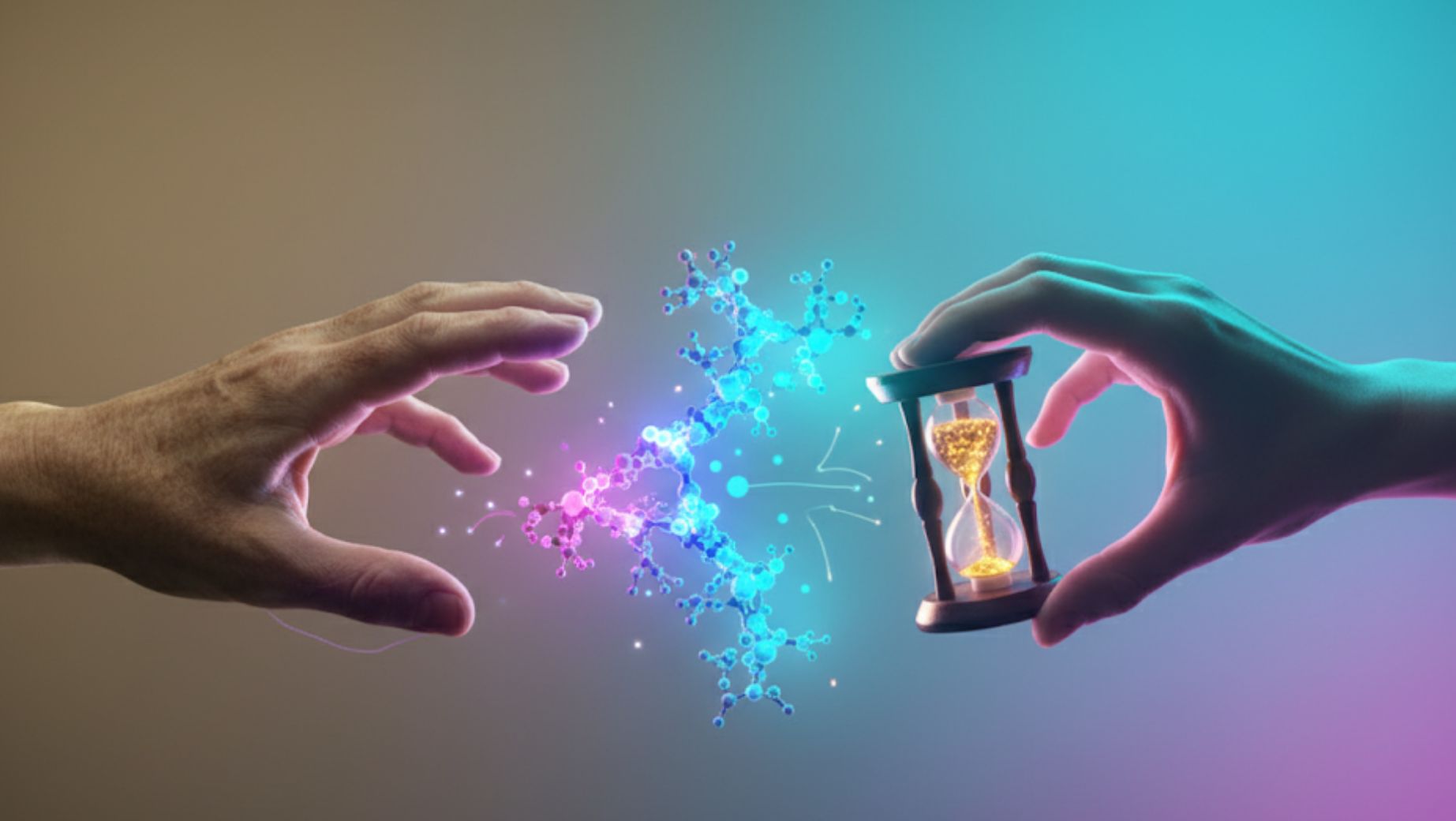
NAD+ as the fundamental building block of energy
NAD+ stands for nicotinamide adenine dinucleotide. It may sound complicated, but it’s simply a substance essential for the functioning of so-called cellular energy.
-
Every cell needs fuel – and that fuel is ATP (adenosine triphosphate).
-
In order for ATP to be produced, NAD+ is required.
-
NAD+ transfers electrons and helps trigger hundreds of biochemical reactions without which the body could not function.
In other words, without NAD+, the body would stop functioning because it wouldn’t have enough energy.
How is NAD+ related to aging?
One of the biggest questions in longevity science is: Why do we age? And NAD+ is closely connected to this.
-
Levels of NAD+ in the body naturally decrease with age.
-
NAD+ deficiency is associated with fatigue, poorer regeneration, susceptibility to disease, and faster cellular aging.
-
Scientists are investigating whether increasing NAD+ levels through so-called precursors (such as NMN or NR) could slow down the aging process.
It’s no wonder that NAD+ has become a star of anti-aging research around the world.
What are the functions of NAD+?
NAD+ is like a silent hero working behind the scenes. It ensures that everything runs as it should:
-
Energy production – helps produce ATP in mitochondria.
-
DNA repair – supports enzymes that repair damaged genetic material.
-
Immune support – influences the body’s immune defenses.
-
Proper brain function – participates in communication between nerve cells.
-
Regulation of sleep and circadian rhythm – NAD+ is linked to the functioning of so-called clock genes.
How can NAD+ levels be supported?
Scientists are now looking for ways to replenish NAD+ in the body. Some approaches are already well studied:
-
NAD+ precursors – substances such as NMN (nicotinamide mononucleotide) or NR (nicotinamide riboside), which are converted into NAD+ in the body. These substances are now appearing in dietary supplements aimed at longevity.
-
Healthy lifestyle – regular exercise, quality sleep, and a varied diet can naturally support NAD+ balance.
-
Intermittent fasting – some studies suggest that alternating periods of eating and fasting contributes to higher NAD+ levels in cells.
-
Stress reduction – chronic stress and excessive alcohol consumption reduce the efficiency of NAD+ metabolism.
NAD+ in modern research
NAD+ has become one of the most studied topics in longevity science. Its effects are being investigated not only in relation to aging, but also in cases of:
- neurodegenerative diseases (e.g. Alzheimer’s disease),
- cardiovascular problems,
- metabolic disorders such as obesity or diabetes,
- inflammatory conditions.
Research is still ongoing, but early results look promising and suggest that maintaining optimal NAD+ levels may be one of the keys to a healthy and vital old age.
Why is NAD+ popular in biohacking?
Biohacking, the conscious “tuning” of the body and mind through diet, exercise, or supplements, has embraced NAD+ with great enthusiasm. The reason is simple: if you want more energy, better sleep, and at the same time slow down aging, NAD+ is at the center of attention.
Many people therefore start taking supplements with NMN or NR and combine them with a healthy lifestyle. However, whatever you decide, it’s important to remember that the science of NAD+ is still evolving and only future studies will reveal its full potential.
Summary
NAD+ is a coenzyme essential for life. Without it, our cells could not produce energy, repair DNA, or protect the body from diseases. However, its levels decrease with age, which is associated with fatigue, slower regeneration, and the aging process. That’s why scientists and the public alike are interested in ways to support NAD+.