_(1).svg)
Do you have zinc at home, but every time you take it, your stomach feels uneasy? Or do you diligently take it, but you actually don’t know exactly what it should do to your body? Zinc is one of the most important, yet also one of the most misunderstood minerals.
Why take zinc at all?
Before we dive into timing, let’s remind ourselves why we do it. Here is a detailed overview of what zinc can do:
1. Immune shield and fighting infections
This is reason no. 1 why people buy zinc. Zinc directly activates T-lymphocytes (cells that search for and destroy viruses).
-
Prevention: With long-term use, it keeps the immune system on alert.
-
Acute support: Studies confirm that if you take an increased dose of zinc (about 25 mg) within the first 24 hours of a cold, it can shorten the duration of illness by up to 30% and alleviate its course.
2. Acne and healing
In dermatology, zinc is considered the holy grail. Why?
- Fighting acne: Zinc suppresses inflammatory processes and reduces sebum production, directly addressing the cause of pimples.
- Wound healing: It is essential for collagen synthesis. Without zinc, abrasions, acne scars, or cold sores heal extremely slowly.
- Cell protection: Acts as an antioxidant and protects the skin from premature aging caused by UV radiation.
3. Hormonal balance and fertility
Zinc is absolutely critical for reproductive health in both sexes.
-
For men: It is key for testosterone production and prostate health. Low zinc levels are directly associated with lower sperm count and decreased libido.
-
For women: It contributes to egg maturation and hormonal regulation during the cycle. During pregnancy, it is essential for proper fetal development (cell division).
4. Healthy hair and nails
Zinc is "nutrition" for hair follicles. If you have too little, hair weakens, thins, and falls out. Its effect on nails is visible to the naked eye – deficiency causes brittleness, splitting, and typical white spots.
5. Senses and mental health
Did you know that without zinc, you wouldn’t taste or smell? It is essential for the functioning of taste buds. It also plays a role in brain neuroplasticity, and its deficiency is often associated with brain fog, fatigue, and depressive moods.
When to take zinc?
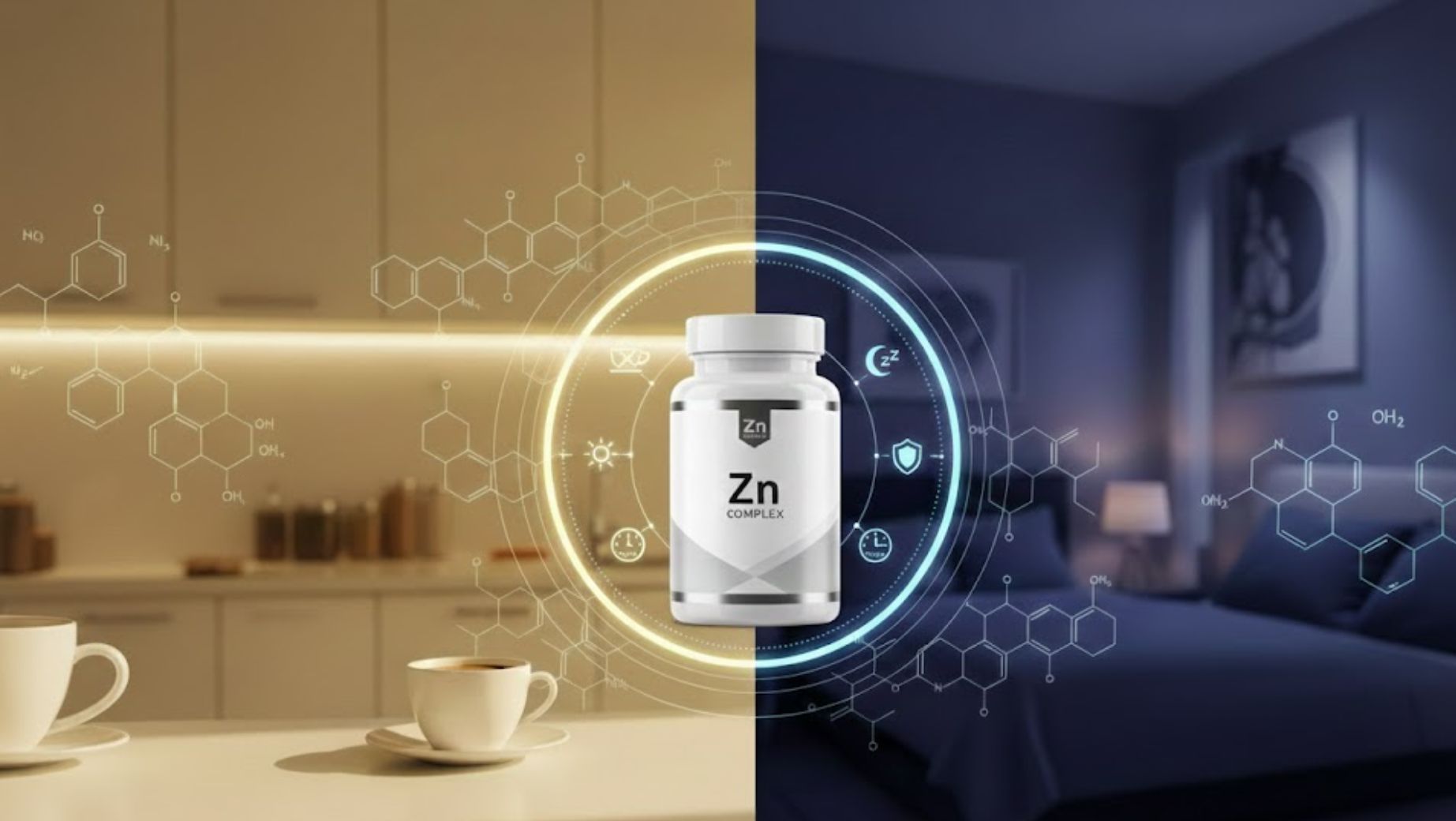
Now that you know why to take it, let’s solve when. Unlike magnesium (which calms) or B-complex (which energizes), zinc is time-neutral.
- Morning: Ideal for building a habit. If you take it for immunity and skin, you won’t forget it in the morning.
- Evening: Often recommended for athletes and men. Zinc participates in night regeneration and testosterone production during sleep (the popular combination is ZMA = Zinc + Magnesium before bed).
➤ Choose the time that suits you and stick to it. More important than the hour is what you eat with it.
How to take it?
Here we encounter the biggest practical problem.
- Theory (Empty stomach): Zinc is best absorbed on an empty stomach (1 hour before a meal).
- Practice (Nausea): Zinc is strongly astringent. If a sensitive person takes it on an empty stomach, strong nausea and stomach cramps can occur within 15 minutes.
➤ Recommendation: If zinc makes you feel unwell, always take it with food. Ideally with proteins (meat, eggs). A small reduction in absorption is better than feeling sick.
Enemies of zinc: What never to combine it with
Zinc is a bit of an "introvert" in the digestive tract and can easily be displaced by other substances. If you take it with the wrong drink, almost none will be absorbed.
Watch out for these "blockers":
-
Coffee and tea: They contain tannins, which bind zinc and excrete it from the body. Leave at least 2 hours between coffee and zinc.
-
Phytates (Grains, legumes): Phytic acid in whole grain bread or oats significantly reduces zinc absorption.
-
Calcium and Iron: These minerals use the same "absorption channels". If you take large doses of calcium or iron, do not take them at the same time as zinc. Separate them (e.g., calcium in the morning, zinc in the evening).
-
Some antibiotics: Zinc may reduce their effectiveness (e.g., tetracyclines). Always consult your doctor.
Dosage: Less is sometimes more
With zinc, more is not always better. Long-term high doses (over 50 mg daily) can be toxic and interfere with copper absorption, which paradoxically leads to weakened immunity and anemia.
- Common daily dose: 10–15 mg (maintenance dose for a healthy person).
- Therapeutic dose: 25 mg (for starting colds, acne, or for athletes). Higher doses should only be used short-term.
Conclusion
Zinc is a powerful tool. It can clear your skin, strengthen immunity, and balance hormones. But to achieve this, it requires discipline. Buy a quality form, take it regularly, and most importantly, don’t wash it down with your morning coffee. Your body will reward you with resilience and energy.
Author: Terka