_(1).svg)
Does the bitter taste of kratom bother you and make it hard to enjoy? You’re not alone. Flavor is one of the biggest challenges for many users. In this article, you’ll learn why kratom tastes so bitter and, more importantly, how to improve it with one simple trick. Keep reading to discover easy methods that actually work.
Summary first:
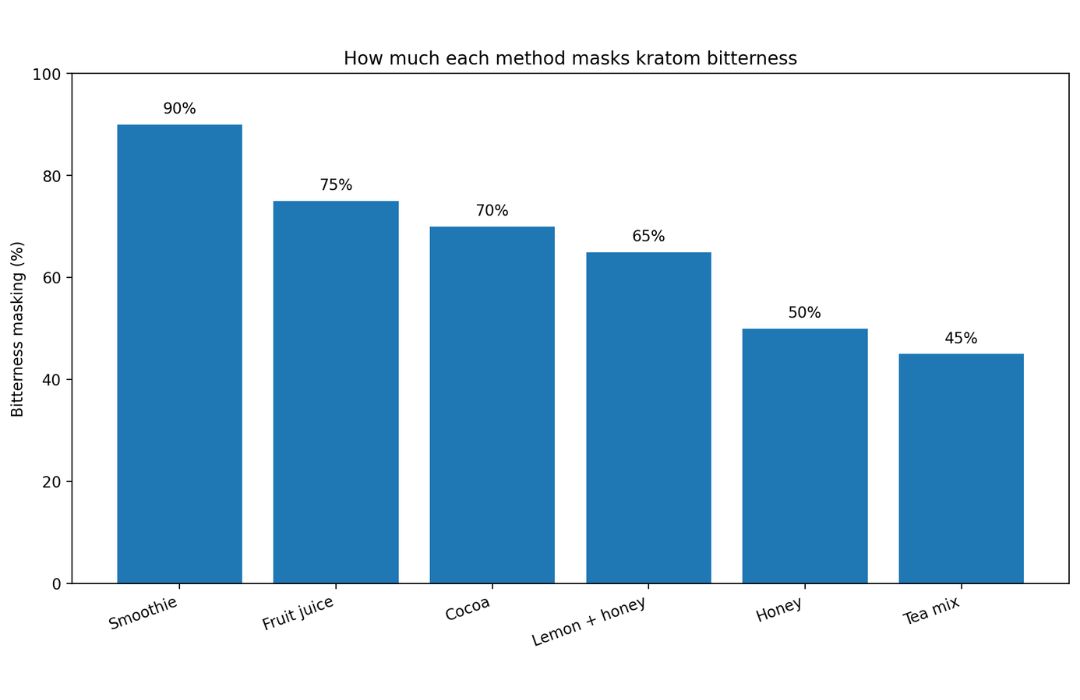
The most effective simple trick to make kratom taste better is to combine sweet and sour elements, such as fruit juice or lemon with honey, to significantly reduce bitterness.
This works by balancing taste receptors and softening the harsh herbal notes. It requires no complicated preparation or special tools. Just a few common kitchen ingredients can make an immediate difference.
For beginners, this method helps create a much more comfortable first experience. Over time, you can experiment and find the combination that suits your taste best.
| Method | Effect on taste | Difficulty | Best for |
|---|---|---|---|
| Fruit juice (orange, pineapple) | Strong masking, fresh taste | Very easy | Beginners |
| Honey / agave | Smooths bitterness | Very easy | Mild taste preference |
| Lemon + honey | Balanced sweet & sour | Easy | Tea drinkers |
| Flavored syrups | Strong flavor override | Easy | Sweet drinks |
| Smoothie | Almost complete masking | Medium | Sensitive users |
| Cocoa mix | Blends bitterness | Easy | Chocolate lovers |
Why kratom tastes bitter
Many people are surprised by the taste of kratom the first time they try it. The bitterness is strong, earthy, and hard to ignore. Some describe it as similar to very dark cocoa, others compare it to unsweetened green tea, but more intense. Why does it taste like that?
Kratom products come from the leaves of the tropical tree Mitragyna speciosa, which grows mainly in Southeast Asia. The leaves contain natural compounds that are responsible for its effects, but these same compounds also create the bitter flavor. The taste is not a sign of poor quality. It is simply part of the plant’s chemistry.
What causes kratom’s bitter taste
The main reason for kratom’s bitterness lies in its alkaloid content. The most discussed alkaloids are mitragynine and 7-hydroxymitragynine. Even though they make up only a small percentage of the total leaf weight, they have a strong impact on taste.
In addition to alkaloids, kratom powder contains:
- Plant fibers
- Natural tannins
- Chlorophyll and other leaf compounds
Tannins are especially important here. They are known for producing a dry and bitter sensation, similar to what you feel when drinking strong black tea.
When kratom powder mixes with water, these compounds dissolve quickly, which makes the bitterness noticeable almost immediately.
Kratom bitter taste issues and taste masking
The bitterness can cause discomfort, especially for beginners. Some users report a mild gag reflex, particularly when using the “toss and wash” method, where powder is placed directly in the mouth and washed down with water. The fine powder can stick to the tongue or throat, which makes the flavor linger longer than expected.
Taste masking works by balancing or overpowering the bitter notes. Sweet and sour flavors are especially effective because they stimulate different taste receptors. This reduces how dominant the bitterness feels.
Common taste masking strategies include:
- Mixing with strong fruit flavors
- Adding natural sweeteners
- Combining with flavored beverages
Why beginners notice the taste more
Beginners often react more strongly to kratom’s taste because it is new and unexpected. The brain has no prior association with the flavor, so it stands out sharply. Over time, repeated exposure can reduce sensitivity. This is similar to coffee, tonic water, or very dark chocolate. The first experience can feel intense, but familiarity changes perception.
Psychology also plays a role. When someone expects a bad taste, they focus on it more. Experienced users often report that the taste becomes manageable after several uses.
.jpg)
Easy ways to make kratom taste better
Improving the taste does not require complicated steps. Simple kitchen ingredients are usually enough.
Mix with flavored juices
Fruit juices are one of the easiest solutions. Orange, pineapple, or grapefruit juice works well because they have strong and slightly acidic profiles. The acidity and sweetness help balance the bitterness.
A simple method:
- Add kratom powder to a glass
- Pour in a small amount of juice and stir thoroughly
- Top up with more juice and mix again
Cold juice often makes the drink easier to consume quickly.
Combine with honey or agave syrup
Honey and agave syrup add natural sweetness and a smoother texture. Sweetness can partially block bitter taste receptors, which makes the overall flavor milder.
You can:
- Stir kratom into warm (not boiling) water
- Add one or two teaspoons of honey or agave
- Mix until fully blended
This method works well for people who prefer less acidity.
Use flavored syrups
Flavored syrups, such as vanilla, caramel, or berry varieties, are another practical option. They are concentrated and designed to mask strong flavors in drinks like coffee, so they can also reduce kratom’s bitterness effectively.
Only a small amount is needed. The result is a drink that feels more like a flavored beverage than a raw herbal mixture. Over time, many users experiment and find a routine that fits their taste preferences and daily habits.
How to improve kratom tea flavor
Kratom tea is usually smoother than raw powder, but the bitterness can still be strong. The final taste depends on dose, water temperature, and steeping time. If you steep the leaves or powder too long, more tannins are released. That makes the drink drier and more bitter.
The good news is that small adjustments can noticeably improve the flavor without changing the basic preparation.
Lemon and honey
Lemon and honey is a simple and effective combination. Lemon adds acidity, which helps balance the bitterness. Honey brings sweetness and a smoother mouthfeel.
You can squeeze fresh lemon juice into your prepared tea and then stir in one or two teaspoons of honey. The sweet and sour contrast reduces the sharp herbal notes. Many people prefer this method because it keeps the drink light and natural.
Vanilla almond milk
Vanilla almond milk changes the character of kratom tea more significantly. It adds creaminess and soft sweetness. Fat content and vanilla aroma help soften the bitter edge.
This method works best with warm tea. Prepare a slightly stronger brew, then add warmed vanilla almond milk. The result feels closer to a mild latte than a plain herbal infusion.
Hot cocoa mix
Chocolate has a naturally bold taste. That makes it useful for masking plant bitterness. A hot cocoa mix can cover much of kratom’s earthy profile.
Prepare your tea with less water so the base is concentrated. Then add cocoa mix and stir thoroughly. The chocolate flavor blends with the natural bitterness instead of fighting it, which can make the drink easier to finish.
Mix with regular tea bags
Another option is combining kratom with standard tea bags. Strong black tea, chai blends, or fruity infusions can shift the overall flavor profile. By the way it is also possible to buy fruit kratom which is a mixture of powder and concentrated fruit extracts.
Steep both together in hot water, but avoid boiling temperatures. The added tea aroma helps dominate the herbal base. If needed, you can still add a bit of sweetener afterward.
Why not try another strain
Different kratom strains can have slightly different taste profiles. Some feel more earthy, others more mild or grassy. The differences are not extreme, but sensitive users may notice them.
If one strain tastes too harsh, trying another may improve your experience without changing your routine.
Simple kratom drink ideas
If plain tea feels boring, you can experiment with more creative drinks. These options are easy to prepare at home and do not require special equipment.
Classic kratom tea
The basic method remains popular because it is simple and controlled. For many users, the preparation of kratom tea is also easy to customize at home. Use hot, not boiling water, and steep for about 10 to 15 minutes. Strain if needed. You can adjust strength by changing the amount of powder or water.
This method gives you a clear idea of the natural taste and strength.
Kratom iced citrus cooler
This version works well in warm weather. Brew a stronger tea, let it cool, then pour it over ice. Add fresh orange or lemon juice and top with sparkling water.
The citrus acidity and carbonation make the drink feel lighter and more refreshing. The bitterness becomes less dominant when served cold.
Kratom smoothie bliss
Smoothies are practical because thick texture masks flavor effectively. Fruit sweetness naturally reduces perceived bitterness.
You might use:
- Banana
- Berries
- Yogurt or plant-based milk
Blend everything with your measured dose. The result tastes closer to a fruit shake than a herbal drink.
What beginners should consider
Beginners often focus only on taste, but preparation and dosage of kratom matter just as much. A balanced approach helps avoid negative first impressions.
Why is it advised for beginners to mask the bitter taste
A very bitter first experience can create resistance. If the taste feels overwhelming, the user may associate the entire product with discomfort.
Masking the flavor:
- Reduces the risk of gag reflex
- Makes the drink easier to consume calmly
- Improves overall comfort during the first trials
When the experience feels manageable, beginners can focus more on how their body reacts.
Things beginners must consider before experimenting
Before trying different recipes, beginners should keep dosage low and consistent. It is better to test one variable at a time. Changing dose, strain, and preparation method at once makes it hard to evaluate results.
Avoid mixing with alcohol. Pay attention to hydration. Give your body enough time between attempts.
Common mistakes to avoid
Some mistakes are easy to prevent. Using boiling water can intensify bitterness. Taking too high a dose during the first attempt can lead to discomfort. Not mixing thoroughly can leave clumps, which concentrate flavor in one sip.
Sources
- The Pharmacology of Kratom and Its Alkaloids
Read the study - Developing a Knowledge Graph Framework for Natural Product–Drug Interactions
Read the study - Journal of Environmental Law & Sustainability – Research Article
View the article - FDA and Kratom – Public Health Focus
Visit official FDA page - Mitragyna speciosa (Kratom) – Wikipedia
Read more