_(1).svg)
Water lilies are among the most beautiful aquatic plants, which have fascinated humanity for thousands of years. Their flowers have become a symbol of purity, spirituality, and harmony across many cultures. The most well-known and sought-after are the white water lily (Nymphaea alba) and the blue water lily (Nymphaea caerulea), each of which has unique properties, significance, and uses. Let's explore how these water lilies differ and what they are all about.
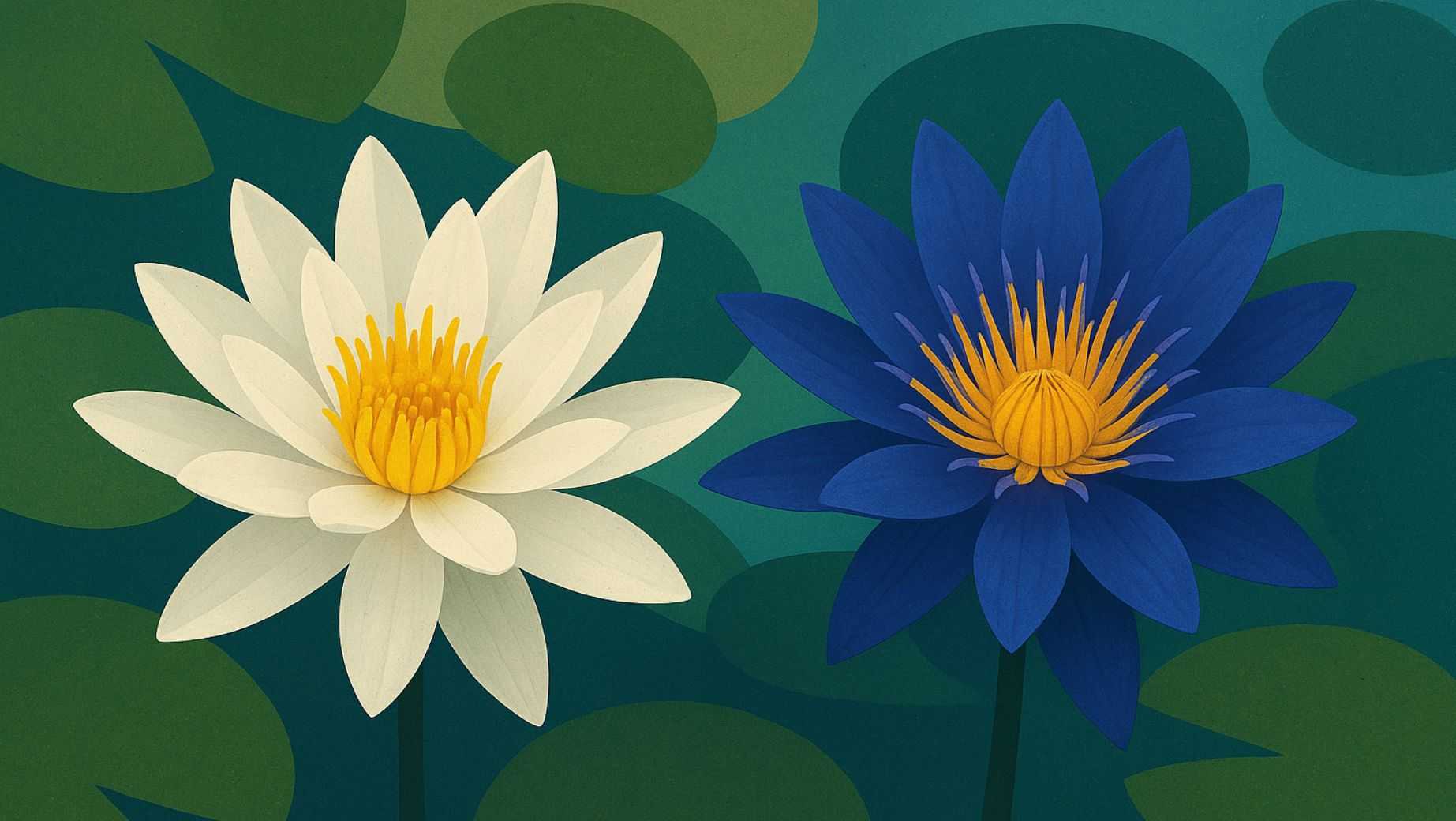
White water lily (Nymphaea alba)
White water lily originates from Europe and Asia and is known for its elegance and pure white flowers. It grows up to 15 cm in diameter and blooms from June to September. The floating leaves are round, heart-shaped, and can reach up to 30 cm in diameter.
Symbolism of the white water lily
- Purity and spiritual renewal – in many cultures, the white water lily represents a symbol of a pure mind and soul.
- Peace and harmony – the white color evokes calmness, innocence, and balance.
- Christian and Buddhist tradition – often appears in spiritual art as a symbol of enlightenment.
Effects of the white water lily
Traditionally used in European folk medicine:
- Sedative effect (supports sleep, relieves nervousness)
- Analgesic effect (menstrual pain, inflammations)
- Anti-inflammatory effect (urinary and respiratory issues)
- Supports relaxation and peaceful sleep
Composition of the white water lily
- Alkaloids: nupharin, nufaridin – associated with mild sedative and analgesic effects
- Tannins – anti-inflammatory and astringent effects
- Flavonoids – natural antioxidants
- Glycosides – contribute to the plant’s calming properties
Blue water lily (Nymphaea caerulea)
Blue water lily, also known as the Egyptian lotus, originates from the Nile region and had immense cultural significance in North Africa. Its delicate blue-violet flowers open during the day and close after sunset.
Symbolism of the blue water lily
- Enlightenment and consciousness – ancient Egyptians associated it with the sun and the cycle of rebirth.
- Sensuality and spirituality – considered an aphrodisiac and part of sacred rituals.
- Meditative and healing effects – traditionally used to calm the mind.
Effects of the blue water lily
According to traditional sources and experience:
- Calming and relaxing effects
- Supports meditation and spiritual practice
- Enhances dream activity and possibility of lucid dreaming
- Perceived as an aphrodisiac and a means to induce mild euphoria
It is important to emphasize that scientific studies have not definitively confirmed these effects. Most information comes from traditional use.
Composition of the blue water lily
- Alkaloids: mainly nuciferine and other aporphine alkaloids – associated with relaxing and euphoric effects
- Flavonoids – antioxidant action, cell protection
- Essential oils – give the flowers a distinct fragrance valued in rituals
- Phenolic compounds – support overall plant vitality
Differences between white and blue water lilies
|
Property |
White water lily (N. alba) |
Blue water lily (N. caerulea) |
|
Origin |
Europe, Asia |
Egypt, Africa |
|
Flower Color |
White |
Blue to violet |
|
Symbolism |
Purity, harmony |
Spirituality, enlightenment |
|
Effects |
Sedative, analgesic |
Relaxing, lucid dreaming, aphrodisiac |
|
Cultivation |
Resilient, easy |
Demanding, tropical plant |
Use of white and blue water lilies: How do they differ?
Although the white and blue water lilies belong to the same genus Nymphaea, their traditional use has developed differently throughout history. The differences arise not only from distinct compositions but also from the cultural context in which each species was used.
1. Use of white water lily (Nymphaea alba)
For centuries, the white water lily was part of European folk medicine. Its flowers and roots were dried and prepared as tea or decoction, recommended for:
- insomnia and anxiety,
- headaches or menstrual discomfort,
- urinary tract and respiratory inflammations.
Sometimes, compresses from the white water lily were applied to the skin for eczema or irritation. Its effects are mainly linked to its sedative and analgesic properties, so it was regarded more as a “calming herb” than as a spiritual aid.
2. Use of blue water lily (Nymphaea caerulea)
The blue water lily has a completely different story – in ancient Egypt, it was considered a sacred ritual plant. Its flowers were added to wines, infusions, or incense to induce relaxation and a spiritual experience. Today, it is used similarly:
- Tea or maceration from dried flowers,
- Extracts or tinctures,
- sometimes smoking dried flowers in ritual practices.
According to traditional experience, the blue water lily has relaxing and euphoric effects, supports meditation, and is associated with lucid dreaming. While the white water lily mainly affects the body, the blue one targets the mind and consciousness.
White vs. Blue water lily: Which is more suitable?
If you are looking for a resilient and aesthetic plant for a garden pond, the white water lily is a clear choice. It is low-maintenance, blooms beautifully, and can create a perfect water scenery.
On the other hand, the blue water lily is more of an exotic rarity. It requires specific conditions but rewards with flowers that carry strong symbolic and historical significance. For lovers of Egyptian culture or collectors, it is a true gem.